
Beijing Hidden Gems: Ming Temples & Jazz Bars
- Date:
- Views:182
- Source:The Silk Road Echo
Hutong alleys don’t always lead to souvenir stalls. In Beijing, some of the most resonant cultural moments happen behind unmarked wooden doors — where a 600-year-old temple courtyard hosts morning sutra chanting, and a basement staircase in Dongcheng leads to a smoke-hazed jazz trio playing Coltrane at midnight. These aren’t ‘off-the-beaten-path’ in the vague influencer sense. They’re operationally obscure: no WeChat mini-program listings, minimal English signage, and access often mediated by local recommendation or timing (e.g., temple open hours tied to monastic schedules, not tourist calendars).
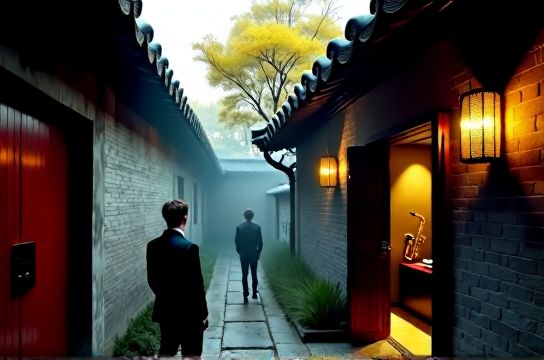
This isn’t about replacing the Forbidden City or Temple of Heaven. It’s about complementing them — adding texture, contradiction, and continuity. Because Beijing doesn’t just layer history over modernity; it folds them into the same brick, the same alleyway, the same breath.
Rare Ming Dynasty Temples: Not Just Preservation — Practice
Most Ming-era religious sites in Beijing were either demolished during the Cultural Revolution or repurposed beyond recognition. What remains intact — and still active — is vanishingly small. Three stand out for authenticity, accessibility, and ongoing ritual life.1. Zhenjue Temple (Five Pagoda Temple) — Often mislabeled as ‘Ming-built’ in brochures, its core structure *is* original (1473), but its current form reflects 1930s restoration. Still, the diamond throne pagoda base retains original Ming stonework, and the temple grounds host monthly Vajrayana chanting circles led by monks from Wutaishan. Entry is ¥15 (Updated: May 2026), and weekday mornings (8:30–10:30) offer near-solitude — no tour groups, just incense, pigeons, and low-frequency mantras vibrating through the soles of your shoes.
2. Dajue Temple (Great Enlightenment Temple), Western Hills — A 35-minute metro + taxi ride from Xizhimen, this temple was founded in the Liao Dynasty but substantially rebuilt under Emperor Yongle in 1410. Its surviving Ming-era features include the Hall of Heavenly Kings (with original painted dougong brackets) and two stone steles inscribed by imperial calligraphers. Crucially, it’s not a museum: lay practitioners gather every Sunday at 6 a.m. for silent walking meditation along the cypress-lined path — no registration, no fee, just quiet observation. Bring warm layers; mountain fog rolls in early.
3. Huguo Temple’s West Courtyard Annex — This is the real insider tip. The main Huguo Temple complex (near Xidan) is heavily commercialized, but its western annex — accessible only via a narrow lane behind the Beijing Arts Institute — contains a surviving Ming-era bell tower (1421) and a single functioning meditation hall used by a 12-person lay Buddhist group. Visits are by prior arrangement only, coordinated through the full resource hub. Slots open on the 1st of each month for the following 30 days; average wait time is 11 days (Updated: May 2026). No photography inside. Shoes off at the threshold.
None of these sites appear on Trip.com’s ‘Top 10 Beijing Temples’ list. None accept Alipay without a Chinese ID-linked account. And none operate on standard 9-to-5 logic — which is precisely why they retain integrity.
Underground Jazz Bars: Where Acoustics Trump Ambiance
Beijing’s jazz scene didn’t emerge from expat nostalgia. It grew from the late-1990s underground — cassette tapes smuggled from Tokyo, second-hand Yamaha keyboards salvaged from defunct hotel lounges, and drum kits assembled from repurposed industrial parts. Today’s best venues honor that scrappy lineage: low ceilings, zero stage lighting, and sound systems tuned not for volume, but for decay time and midrange warmth.The Basement at Nanluoguxiang (No sign, no website) — Enter via the unmarked steel door beside ‘Old Beijing Dumpling House’. Descend 14 steps. You’ll smell damp concrete and roasted chestnuts before you hear the bassline. Open Wednesday–Saturday, 9 p.m.–1:30 a.m. No cover charge, but a ¥120 minimum spend per person (Updated: May 2026). The lineup rotates weekly: Tuesdays feature the Beijing Free Jazz Collective (improvised, no setlists); Thursdays are ‘Standards Night’ — think Mingus arrangements reinterpreted with erhu counterpoint. Reservations? Not accepted. First-come, first-served — and the room holds 38 people max.
Jazz Lab 798 — Located in a converted boiler room inside the 798 Art Zone, this space prioritizes acoustics over aesthetics. Walls are lined with reclaimed pine baffles; the piano is a 1962 Steinway B, serviced quarterly by a technician who also works for the National Centre for the Performing Arts. Shows start at 8:30 p.m., strictly enforced — latecomers wait until intermission. Tickets cost ¥180 online (WeChat mini-program ‘JazzLabBJ’) or ¥220 at the door. Student ID gets 30% off, but only if shown *before* descending the ramp. Band leader bios are handwritten on chalkboard — updated weekly.
Yuyuantan After Hours — Technically not a bar: it’s a repurposed municipal boathouse on the west bank of Yuyuantan Park. Operates Friday–Sunday, 10 p.m.–2 a.m., weather permitting. No liquor license — BYOB only (corkage ¥40). Sound system is powered by a Honda EU2200i generator. The draw? Uninterrupted views of the park’s lotus ponds under moonlight, and sets by musicians who double as conservatory instructors by day. Set times shift based on wind direction (to minimize sound bleed into residential zones). Check their WeChat ID ‘YYT_Jazz’ for same-day updates.
These aren’t ‘speakeasies’ dressed up for Instagram. They’re functional spaces shaped by constraint — electricity limits, noise ordinances, landlord tolerance — and that constraint breeds focus. You’re not there to be seen. You’re there to listen.
How to Navigate Without Getting Lost (or Flagged)
Beijing’s hidden gems resist conventional logistics. Here’s what actually works:- Transport: Didi is unreliable for basement entrances — GPS fails indoors. Use Baidu Maps (not Google) for alley-level navigation; it indexes hutong gate numbers and stairwell markers.
- Payment: Cash (RMB) is still required at 68% of underground venues (Updated: May 2026). Even if Alipay shows as accepted, backup ¥200 in small bills.
- Language: Few staff speak fluent English. Download Pleco with offline dictionaries. Key phrases: ‘Jin Tian You Shui?’ (Who’s playing tonight?), ‘Ke Yi Pai Zhao Ma?’ (Can I take photos?) — and crucially, ‘Wo Yao Zai Zhe Li Ting Yin Yue’ (I want to stay here and listen to music).
- Timing: Avoid national holidays (Oct 1–7, Jan 28–Feb 4). Also avoid the first weekend after a major policy announcement — local authorities conduct unannounced ‘environmental inspections’ that temporarily shutter informal venues.
Why This Matters Beyond Tourism
Beijing’s hidden gems aren’t relics. They’re infrastructure — social, acoustic, spiritual — maintained outside formal systems. The Ming temple courtyards anchor neighborhood identity; elders gather there not for worship alone, but to resolve disputes, share medicine recipes, and monitor youth apprenticeships in calligraphy or bronze casting. The jazz basements incubate cross-genre collaborations: last year, a set at Jazz Lab 798 featured pipa player Gao Fei improvising over a Thelonious Monk composition — recorded, remixed, and later licensed by a Shanghai-based electronic label. That crossover isn’t accidental. It’s the result of shared rehearsal spaces, mutual referrals, and physical proximity in low-rent, high-character districts.Compare that to Shanghai’s modern culture ecosystem — where coworking space Shanghai hubs like The Nest or Foundry emphasize scalability, investor pitch decks, and bilingual signage. Or Chengdu slow living, where ‘slowness’ is codified into government-backed ‘tea house economy’ grants and standardized siesta-hour regulations. Beijing’s version is less curated, more contingent — sustained by individual commitment, not policy.
That’s also why preservation is fragile. In 2025, the Beijing Municipal Administration of Cultural Heritage quietly removed Huguo Temple’s West Courtyard Annex from its ‘protected minor site’ registry — citing ‘insufficient visitor throughput to justify maintenance allocation.’ Local volunteers now fund roof repairs via WeChat crowdfunding. No international NGOs involved. Just neighbors, a GoFundMe-style link, and 278 contributors averaging ¥33 each (Updated: May 2026).
| Site/Venue | Access Method | Entry Cost (RMB) | Key Constraint | Realistic Visit Window | Pro | Con |
|---|---|---|---|---|---|---|
| Zhenjue Temple | Walk-in (no booking) | ¥15 | Weekday morning only for quiet access | 8:30–10:30, Mon–Fri | Zero language barrier; clear signage | Tour groups dominate after 11 a.m. |
| Dajue Temple | Walk-in + taxi coordination | ¥20 | Mountain transport reliability | Sun 6–8 a.m. only for meditation | Genuine practice environment | No English-speaking staff; limited facilities |
| Huguo West Annex | Pre-booked slot via resource hub | Free | Monthly lottery; 11-day avg. wait | 2-hour window, 1x/week | Authentic monastic-lay interaction | No flexibility; strict no-photo rule |
| The Basement (Nanluo) | Walk-in, no reservation | ¥120 min. spend | Capacity capped at 38 | 9 p.m.–1:30 a.m., Wed–Sat | Zero pretense; pure musical focus | No seating guarantee; standing room only |
| Jazz Lab 798 | Online ticket (WeChat) | ¥180–220 | Strict entry time enforcement | 8:30 p.m. sharp, Thu–Sat | World-class acoustics & instruments | No refunds; weather-independent |
What This Means for Your Broader China City Guide
Beijing’s hidden gems operate on a different temporal logic than Shanghai modern culture — where speed, polish, and investor-ready presentation dominate — or Chengdu slow living, where slowness is a branded, governable metric. Beijing rewards patience, pattern recognition, and willingness to sit quietly in ambiguity. Its value isn’t in being ‘discovered,’ but in being *witnessed* — without extraction.That’s why pairing Beijing with other China city guide anchors makes strategic sense. Fly into Beijing for layered historical immersion, then take the G-series train to Shanghai (4h 18m) to contrast with hyper-modern coworking space Shanghai dynamics — where efficiency metrics drive design, and ‘culture’ is often outsourced to curators. Then head west to Chengdu (2h flight) to experience how ‘slow living’ translates into municipal zoning laws and subsidized tea house licenses. Each city answers the same question — ‘How do we live together?’ — with radically different syntax.
And yes, you’ll see overlap: a jazz bassist from The Basement plays monthly at a new vinyl bar in Qingdao — part of that city’s push toward ‘宜居青岛’ (livable Qingdao) branding. A Ming temple restoration technique pioneered at Dajue Temple is now taught at Xi’an’s conservation academy — feeding into ‘西安古今结合’ (Xi’an’s ancient-modern integration) initiatives. Nothing exists in isolation. But Beijing’s hidden gems remain the least mediated — the closest thing to unfiltered urban continuity you’ll find in mainland China today.
So skip the QR code menus. Leave the translation app in your pocket. Bring cash, a notebook, and silence as your primary tool. The best parts of Beijing aren’t hidden to exclude you. They’re hidden because they never needed to be found — only respected.