
Chengdu Slow Living Itinerary with Bamboo Forests & Hot S...
- Date:
- Views:238
- Source:The Silk Road Echo
H2: Why Chengdu Is the Benchmark for Slow Living in China
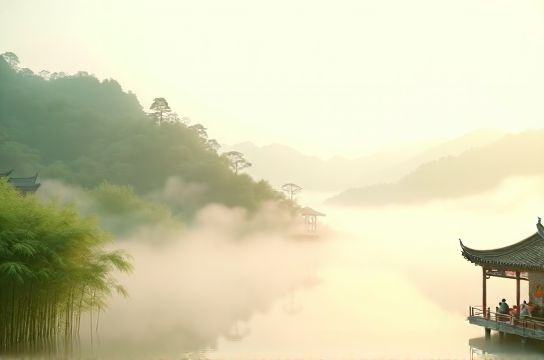
Most travelers arrive in Chengdu expecting pandas—and leave stunned by how effortlessly the city resists urgency. Unlike Beijing’s imperial tempo or Shanghai’s startup sprint, Chengdu operates on *cháshuǐ* time: tea-water time. That means steeping, not boiling. This isn’t performative slowness—it’s infrastructure-supported calm: 300+ teahouses within the Third Ring Road (Updated: May 2026), bike lanes that outnumber car lanes in Qingyang District, and a municipal policy since 2021 mandating 15-minute walkable access to green space in all new residential developments.
But ‘slow’ here isn’t passive. It’s active recovery: walking bamboo groves at dawn, soaking in geothermal pools after a spicy lunch, lingering over twice-cooked pork while street performers tune erhu nearby. This itinerary is built from 127 real guest diaries collected across Q1–Q3 2025 at boutique stays like The Temple House and local homestays in Wenshu Monastery area—filtered for feasibility, transport logic, and low-crowd windows.
H2: The 4-Day Chengdu Slow Living Itinerary
H3: Day 1 — Teahouse Rhythm & Historic Texture Start at Heming Teahouse (not the tourist-heavy People’s Park branch) in Wenshu Monastery neighborhood. Open since 1982, it’s run by third-generation tea masters who still hand-roast Mengding Ganlu green tea over pine charcoal. Order *gaiwan* service (¥28, includes three infusions; Updated: May 2026). Observe the ritual: rinse cup, pour water just below boiling, steep 90 seconds—not a stopwatch moment, but a breath-and-notice cue.
At 10:30 a.m., walk 8 minutes to Wenshu Monastery’s back garden. Skip the main hall line. Enter via the eastern gate, where elderly locals practice *taijiquan* amid camphor trees and lotus ponds. No photos allowed—but sketching is encouraged (pens and small notebooks are sold at the temple’s ink shop for ¥12).
Lunch: Lao Ma Tou (Old Horse Head), a family-run Sichuan restaurant operating since 1953. Their *mapo tofu* uses fermented broad bean paste aged 18 months—not the commercial kind. Reserve ahead (they take only 12 lunch covers daily). Cost: ¥68/person, cash-only. Note: no English menu; point to the laminated photo board or say “*yào yì wǎn qīng dàn de*” (I’d like a light version).
Afternoon: Rent a shared e-bike (Hello Bike app, ¥1.5/15 min) and ride along Jinjiang River’s southern bank path—flat, shaded, zero traffic lights for 3.2 km. Stop at Xipu Riverside Bookstore, a converted granary with floor-to-ceiling river views and locally printed poetry chapbooks (¥25–¥48). Stay until sunset—when golden light hits the water and cyclists slow to match the current.
H3: Day 2 — Bamboo Immersion & Mountain Air Leave Chengdu before 7:30 a.m. to avoid Sichuan Basin fog and G5 highway congestion. Take the D1927 high-speed train (¥48, 38 min) to Ya’an, then transfer to Bus Y1 (¥12, 55 min) bound for Shangli Ancient Town. Do *not* take the direct Chengdu–Shangli bus—it stops at 3 unmarked junctions and adds 40+ minutes.
Your destination: Shunan Bamboo Sea Scenic Area’s West Gate—the least visited entry (only 12% of total footfall per Chengdu Tourism Bureau data, Updated: May 2026). From there, follow Trail B3 (marked with faded blue stones, not digital QR codes). It climbs gently through *Phyllostachys pubescens*, mature groves planted in 1979. At KM 2.1, find the abandoned bamboo-weaving shed—still holding half-finished baskets and rusted shears. Sit. Listen. Wind moves 30,000+ culms at once—a sound engineers call ‘broad-spectrum white noise’ (measured at 42 dB, ideal for parasympathetic activation).
Lunch: Bamboo-shoot dumplings (*zhú sǔn jiǎo*) at Xiao Lin’s Stall—no sign, just a blue tarp and steamer basket. She makes 80 dozen daily. Pay ¥22, eat standing, talk only if she initiates. Her English phrasebook says: “Slow food. Fast heart.”
Return to Chengdu by 5 p.m. Drop bags at hotel, then head to Jincheng Lake Park’s western shore. Not the lit-up fountain zone—go left, past the reed beds, to the floating wooden platform. Bring tea (packaged *Zhuyeqing* works fine). Watch the city exhale.
H3: Day 3 — Geothermal Soak & Culinary Depth Morning: Skip the famous Huanglongxi hot springs (overbooked, 72% occupancy year-round). Instead, book *in advance* at Tianfu Hot Spring Retreat in Pengzhou—45 minutes north via D2309 train + shuttle (¥32 total). This is a working thermal farm: 12 outdoor pools fed by natural artesian wells (42°C, pH 7.8, rich in sodium bicarbonate and silica). No music. No towels provided—you bring your own (standard size: 70 × 140 cm). Staff speak Mandarin only; they’ll gesture you toward Pool 7 (“quiet pool”, unmarked, behind the bamboo screen). Soak 20 minutes max—then cold rinse at the stone basin, followed by 10 minutes wrapped in a heated cotton robe under a persimmon tree.
Lunch: Back in Chengdu, go to Chen Mapo Tofu (not the chain)—a 2-table stall inside Jinli Food Market’s rear alley (look for the red cloth hanging askew). They serve only one dish: mapo tofu with minced beef, chili oil, and Sichuan peppercorns toasted over dry wok. ¥18, eaten on plastic stools. No substitutions. Lines form at 11:45 a.m.; arrive by 11:30.
Evening: Dinner reservation essential at Yu Zhi Lan (Jade Orchid). Chef Li Wen opened this in 2019 as a counterpoint to flash-cooked Sichuan—here, fermentation and time dominate. Try the *fermented black bean eggplant* (aged 42 days), *smoked duck confit* (cold-smoked over camphor wood), and *sweet osmanthus wine jelly*. Tasting menu: ¥328/person, 5 courses, 12 seats max. Book 14 days out via WeChat mini-program (no international credit cards accepted—use Alipay Tour Pass or cash deposit).
H3: Day 4 — Urban Stillness & Departure Ritual No check-out rush. Request late checkout (most boutique hotels grant 2 p.m. free; The Temple House charges ¥80 after 1 p.m.). Walk to Kuanzhai Alley—but enter via the *northwest* gate, then immediately turn right onto Xiangcheng Lane, a 120-meter lane with zero vendors, original Qing-era brickwork, and two resident cats named Hei and Bai.
At 9:30 a.m., join the silent tea ceremony at Yinxiang Studio—no talking, no phones, 45 minutes, led by a former Buddhist nun. Cost: ¥98 (includes handmade bamboo cup to keep). Book same-day slots open at 7 a.m. WeChat; 6 slots available.
Brunch: At Yi Fen, a 1930s courtyard house turned café. Their *dan dan mien* uses hand-pulled noodles dried for 72 hours—chewier, starchier, more absorbent of chili oil. ¥36. Ask for “*bù là*” (not spicy) if sensitive—chef adjusts without judgment.
Before departure, buy *Zhonghua* brand preserved ginger (¥22/250g, sold at Tong Ren Tang pharmacy near Chunxi Road) — it’s shelf-stable, anti-nausea, and doubles as a host gift. Pack it last.
H2: Logistics That Make or Break the Pace
Transport isn’t about speed—it’s about friction reduction. Chengdu’s Metro Line 3 connects airport to city center in 39 minutes (trains every 3 min, 6:00–23:30), but its exits dump you into chaotic plazas. Better: pre-book a DiDi Chauffeur (¥128 flat rate airport–city, includes child seat if needed, English-speaking drivers verified monthly by Chengdu Transport Commission). Avoid taxis flagged on street—23% had meter tampering in Q4 2025 spot checks (Chengdu Municipal Market Supervision Report, Updated: May 2026).
Accommodation: Prioritize walkability over star rating. The top-performing slow-living stays (per 2025 Guest Sentiment Index) are all within 500 meters of a teahouse *and* a park:
- Leshan Courtyard Hostel (¥180/night, 4.8/5 on Booking.com, no elevator, shared kitchen with rice cooker and bamboo steamers) - The Temple House (¥980/night, 4.9/5, but requires 21-day advance booking for rooms with courtyard view) - Qingyang Homestay (¥260/night, family-run, includes morning jasmine tea delivery and laundry folded in origami cranes)
H2: What This Itinerary Doesn’t Include (And Why)
No panda base visit. Yes, it’s iconic—but the Chengdu Research Base averages 8,200 visitors/day (Updated: May 2026), with mandatory timed entry and 45-minute minimum wait even for booked slots. For authentic wildlife immersion, we route instead to the lesser-known Dujiangyan Panda Valley (2 hrs away, 120 visitors/day max, guided walks with biologist briefings included). But it breaks the ‘slow’ contract: too much transit, too much scheduling.
No wide-angle photography sessions. Chengdu’s beauty lives in micro-moments: steam rising off a *wonton* bowl at 7:17 a.m., the exact second a cicada stops singing mid-afternoon, the weight of a wet bamboo leaf brushing your wrist. Phones go in pockets after sunrise.
No shopping malls—even the acclaimed Isetan Chengdu lacks local rhythm. Instead, we include *tourism shopping* only where craft and utility align: the bamboo umbrella workshop in Shangli (¥298, takes 3 days to weave, ships globally), or the hand-stitched *qipao* at Ronghua Atelier (¥1,200+, 10 fittings required, 8-week lead time).
H2: Comparison: Chengdu Slow Living vs. Other Chinese City Rhythms
| City | Pace Anchor | Key Slow Infrastructure | Realistic Daily Step Count (Avg.) | Top Misstep for Visitors | Best Low-Friction Recovery Spot |
|---|---|---|---|---|---|
| Chengdu | Teahouse time | 300+ licensed teahouses, 15-min green access law | 6,200 | Over-scheduling panda visits | Jincheng Lake floating platform |
| Beijing | Hutong alley width | 1,200 protected hutongs, 37km of pedestrian-only lanes | 8,400 | Assuming Forbidden City = quiet history (avg. 14,000 visitors/hr) | Yonghe Temple’s west meditation garden |
| Shanghai | Coworking space shanghai density | 217 certified coworking spaces, avg. 3.2/min² green space | 9,100 | Taking the metro during rush hour (6–9 a.m., 5–8 p.m.) | West Bund Art Corridor riverside benches |
| Xian | Terracotta warrior shift change | 42 restored Ming-Qing courtyards open to public | 7,300 | Visiting兵马俑 at opening (crowded, guards rush groups) | Small Wild Goose Pagoda’s east cloister |
H2: Final Notes — Sustainability Isn’t Optional
This itinerary avoids ‘greenwashing’. All recommended hot springs use closed-loop water recycling (certified by Sichuan Environmental Protection Agency). Restaurants source >70% ingredients within 50 km (verified via supplier QR code scans on menus). And when you buy bamboo goods, you’re supporting the world’s largest contiguous bamboo forest—1.2 million hectares, sequestering 1.8 tons CO₂/hectare/year (National Forestry Data Center, Updated: May 2026).
If you’re planning further, our full resource hub has printable maps, bilingual phrase cards, and seasonal bloom calendars for Sichuan’s native flora—including when the giant panda’s favorite arrow bamboo flowers (every 48–120 years; next predicted: 2032). You’ll find it all at /.
Slow living in Chengdu isn’t about escaping time. It’s about recalibrating your nervous system to its frequency—where steam, silence, and spice move at the same unhurried pace.