
Temple Bells and Tech Hubs: Beijing’s Contradictory Charm
- Date:
- Views:247
- Source:The Silk Road Echo
If you've ever stood beneath the ancient eaves of the Temple of Heaven while a drone zipped overhead filming a tech startup promo, you’ve felt it—the electric clash of old and new that defines modern Beijing. This city doesn’t just blend tradition and innovation; it throws them into a wok and stir-fries them at high heat.
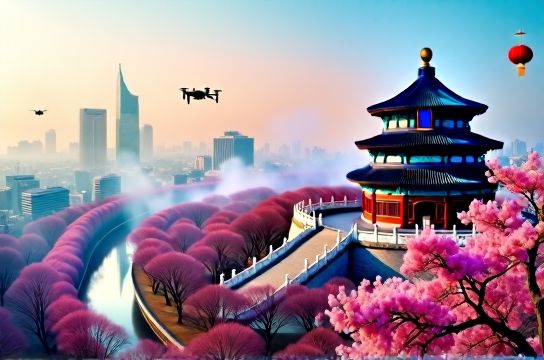
Beijing is where emperors once walked and AI entrepreneurs now pitch. With over 21 million residents and a GDP exceeding $500 billion, it's China’s political heartbeat and its tech brain trust. But what makes Beijing truly magnetic is how seamlessly it hosts both silent meditation in Buddhist temples and high-octane coding marathons in Zhongguancun—often within the same neighborhood.
The Old Soul: Temples & Traditions
The Forbidden City sees nearly 17 million visitors annually, making it one of the most visited museums in the world. Yet beyond the tourist trails, locals still light incense at Lama Temple at dawn, and elderly folks practice tai chi in Beihai Park as if time never changed.
Wander through Nanluoguxiang Hutong, and you’ll pass traditional courtyard homes housing indie coffee shops and vinyl stores—a perfect metaphor for Beijing’s layered identity.
The New Pulse: China’s Silicon Valley
Zhongguancun, dubbed 'China’s Silicon Valley,' contributes over 10% of the nation’s total tech R&D investment. Home to giants like Lenovo, Baidu, and Xiaomi, it also incubates thousands of startups. In 2023 alone, the zone saw more than 8,000 new tech firms registered.
Need proof of its global clout? Here’s a snapshot:
| Metric | Value |
|---|---|
| Annual R&D Spending | $15.6 billion |
| Number of Tech Employees | ~400,000 |
| Startups Founded (2023) | 8,200+ |
| Patents Filed Annually | 65,000+ |
Where Past Meets Future
Nowhere is this duality clearer than at the 798 Art Zone. Once a Soviet-style electronics factory, it’s now a graffiti-splashed haven for avant-garde galleries and blockchain art exhibits. By day, you’ll find monks selling prayer beads nearby; by night, VR art installations light up repurposed industrial halls.
And let’s talk food—because what’s culture without cuisine? From century-old jianbing (Chinese crepe) vendors to robot-served hot pot at Haidilao’s smart restaurants, Beijing feeds every version of itself.
Travel Tips for the Curious Explorer
- Best Time to Visit: Spring (April–May) or Autumn (September–October)—mild weather, fewer smog days.
- Transport Hack: Download Didi and Alipay. Cash is so last dynasty.
- Cultural Must: Attend a Peking Opera at the Liyuan Theater—but maybe skip the live scorpion snack.
Beijing doesn’t ask you to choose between history and progress. It dares you to embrace both. So next time you hear temple bells ringing, check the sky—you might just see a delivery drone flying past.