
East Meets West: How Harbin Bridges Cultures Through Architecture
- Date:
- Views:265
- Source:The Silk Road Echo
If you've ever wondered what happens when Russian soul meets Chinese spirit, take a stroll through Harbin. Nestled in China's icy northeast, this city isn't just famous for its Harbin Ice and Snow Festival—it's an architectural love letter between East and West.
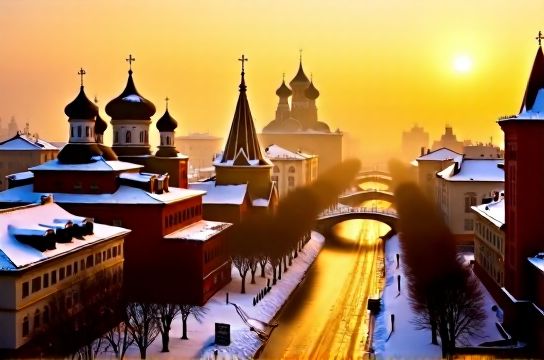
Founded in 1898 as a railway hub for the Chinese Eastern Railway, Harbin became a magnet for Russian engineers, merchants, and exiles. By the 1920s, over 100,000 Russians lived here—more than any other city outside Russia. And they left behind something magical: a skyline where onion domes dance with red lanterns.
The Architectural Gems That Define Harbin
Stroll down Central Street (Zhongyang Dajie), and you’re walking on over 130 years of cultural fusion. Cobbled with T-shaped stones brought from Russia, this 1.4-kilometer boulevard is lined with buildings that whisper European elegance and Chinese resilience.
- St. Sophia Cathedral: Once an Orthodox church, now a museum of architecture. Its green dome and brick-red walls are iconic.
- Harbin Railway Station: Rebuilt in 2017 with Neo-Russo style, blending old-world charm with modern function.
- Baroque & Art Deco Townhouses: Hidden in alleyways, these homes mix floral stucco with Feng Shui layouts.
Cultural Fusion by the Numbers
Let’s break down how deep this blend runs:
| Architectural Style | Number of Buildings | Era Built | Cultural Influence |
|---|---|---|---|
| Russian Revival | 56 | 1898–1930 | Russia + Northern Europe |
| European Eclectic | 89 | 1900–1940 | French, German, Polish |
| Sinified Western | 34 | 1920–1950 | Chinese craftsmanship, Western design |
| Modern Hybrid | 21 | 2000–Present | Contemporary East-West fusion |
Source: Harbin Urban Heritage Bureau, 2023
Why This Blend Matters Today
In an age of globalization, Harbin stands as proof that cultures don’t have to clash—they can collaborate. The city doesn’t mimic the West; it interprets it. Wooden carvings on Russian-style balconies? That’s Heilongjiang craftsmanship. Courtyards aligned with cardinal directions? That’s classic Feng Shui meeting Moscow minimalism.
Tourists aren’t the only ones enchanted. Architects from Shanghai to St. Petersburg study Harbin’s balance of form, climate adaptation, and cultural respect. Even urban planners cite its walkable layout and seasonal resilience—key in -30°C winters!
Plan Your Cultural Walk
Want to experience this fusion firsthand? Here’s a quick itinerary:
- Morning: Start at St. Sophia Cathedral, then wander Zhongyang Street.
- Afternoon: Visit the Harbin Museum of Modern Architecture.
- Sunset: Cross Songhua River to see modern skyline reflections.
- Night: Sip Russian tea while eating guotie (potstickers) in a century-old villa café.
Harbin isn’t just a city—it’s a conversation across continents. And every brick tells a bilingual story.