
Morning Qi: Embracing Chengdu’s Philosophy of Leisurely Living
- Date:
- Views:346
- Source:The Silk Road Echo
Ever wondered why Chengdu locals seem so chill, even when the rest of China is rushing to clock in? It’s not magic—it’s *morning qi*. Forget frantic coffee runs and inbox-zero obsession. In Chengdu, the day starts slow, steeped in tea, tradition, and a whole lot of *yi dian er* (a little bit) of everything.
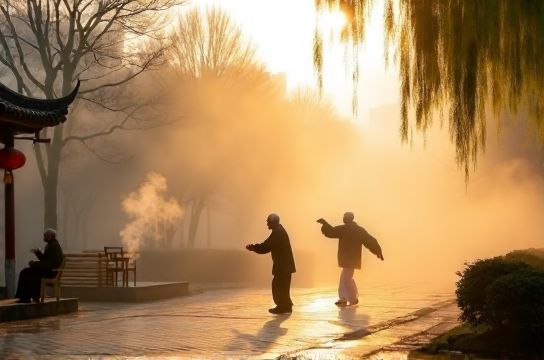
Picture this: dawn breaks over Sichuan’s misty hills, and instead of blaring alarms, you hear the soft clink of porcelain. Old uncles in cotton vests shuffle into neighborhood teahouses, bamboo chairs creaking under their weight. A pot of fresh jasmine tea steams on the table. Someone pulls out a mahjong tile. The day hasn’t even begun—and yet, it already feels complete.
This is *morning qi*: the subtle energy of starting slow, staying present, and savoring life like it’s your last bowl of dan dan noodles. It’s not laziness—it’s a lifestyle choice baked into Chengdu’s DNA. While cities like Shanghai or Shenzhen race toward productivity, Chengdu leans back, sips tea, and says, 'Why rush?' And honestly? We could all learn a thing or two.
The secret? Ritual. Mornings here aren’t about crushing goals—they’re about grounding yourself. Tai chi by the riverbank. A warm sesame pancake from the street vendor. The rhythmic slap of dough hitting a wok for *congyoubing*. These aren’t chores; they’re acts of mindfulness disguised as breakfast.
And let’s talk tea. You can’t spell *Chengdu* without *cha*. Locals don’t just drink tea—they *live* it. Kung fu cha ceremonies might be flashy, but Chengdu’s real tea culture lives in its *gaiwan*—the lidded bowl that lets you swirl, sip, and socialize all at once. One morning, I watched an elderly couple debate Sichuan opera while refilling their gaiwans three times. No agenda. No stress. Just *being*.
Of course, *morning qi* isn’t just about stillness. It’s also about connection. Street markets buzz with aunties haggling over bok choy, kids slurping rice noodle soup before school, and neighbors sharing gossip between sips of tea. There’s a rhythm here—a human pulse that tech-driven cities often lose.
So how can you tap into this vibe, even if you’re not in Sichuan? Start small. Swap your morning energy drink for a proper brew. Sit outside. Breathe. Let your first hour be about sensation, not screens. Take a walk without headphones. Notice the light, the sounds, the smell of food cooking nearby. That’s *qi*—life energy, flowing naturally.
Chengdu teaches us that time isn’t just for optimizing. It’s for experiencing. In a world obsessed with hustle, choosing slowness isn’t rebellion—it’s wisdom. So next time you feel the pressure to do more, be more, achieve more… pause. Pour some tea. Channel your inner Chengdu. Let your morning begin not with a sprint, but with a sigh of relief.
After all, the best way to start the day isn’t with a deadline—it’s with *deliberate calm*. That’s the real *morning qi*.