
Beijing Hidden Gems: Exploring Abandoned Architecture with Rich Histories
- Date:
- Views:183
- Source:The Silk Road Echo
Think Beijing is just the Forbidden City and the Great Wall? Think again. Beyond the postcard-perfect landmarks lies a quieter, more mysterious side of the capital—abandoned buildings whispering stories of bygone eras. These forgotten architectural relics, hidden in plain sight, offer urban explorers a hauntingly beautiful glimpse into China’s layered past.
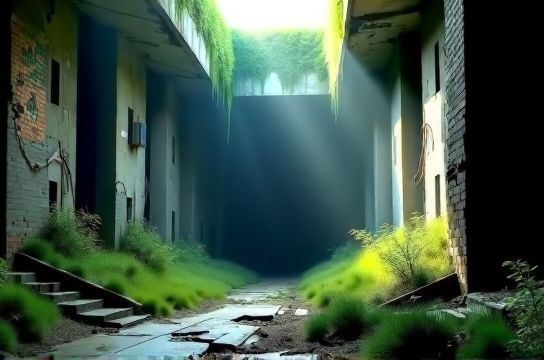
From derelict Soviet-style factories to crumbling Republican-era mansions, these sites are time capsules frozen in decay. Let’s dive into some of Beijing’s most intriguing abandoned spots—and why they’re worth your curiosity (and camera).
The 798 Art Zone’s Shadow: Factory 446
Before 798 became Instagram-famous, Factory 446 stood nearby as part of the same Dongfang Motor Works complex. Built in the 1950s with aid from East Germany, this industrial maze once produced precision instruments for China’s early aerospace projects. Now, it’s mostly sealed off—but peek through rusted gates, and you’ll see peeling propaganda murals and ivy-choked assembly lines.
Data shows that over 60% of Beijing’s mid-century state-run factories have been demolished or repurposed since 2000. Factory 446 survives in limbo, caught between redevelopment plans and heritage preservation debates.
Shuangjing’s Forgotten Mansion
Nestled behind modern high-rises in Shuangjing is a decaying courtyard villa rumored to belong to a Qing dynasty official’s descendant. With broken glass windows, collapsed roof beams, and graffiti-laced walls, it looks like a scene from a ghost film. Locals say it was abandoned after a family dispute in the 1990s—and no one’s touched it since.
Despite its condition, the structure retains intricate wood carvings and a symmetrical layout true to traditional siheyuan design. It’s a stark contrast to the luxury condos surrounding it.
Beijing’s Underground Cold War Bunker
Built during the Sino-Soviet split, the Underground City (Dixia Cheng) spans over 850,000 sqm beneath central Beijing. Intended to shelter millions during nuclear attack, it was declassified in the 2000s—but large sections remain sealed. Some tunnels now host art installations; others drip with moisture and echo with silence.
| Site | Era | Original Use | Status |
|---|---|---|---|
| Factory 446 | 1950s | Military Manufacturing | Abandoned / Restricted |
| Shuangjing Mansion | Early 1900s | Private Residence | Derelict / Privately Owned |
| Underground City | 1969–1979 | Civil Defense | Partially Open / Tourist Site |
Urban exploration isn’t just about adrenaline—it’s about memory. These places remind us that progress often leaves history in the dust. But with growing interest in adaptive reuse, there’s hope some sites may be preserved.
So next time you’re in Beijing, skip the crowds. Wander the edges. Listen to the wind through broken windows. That’s where the real stories live.