
Shanghai Modern Culture: The Evolution of Street Art in Xuhui District
- Date:
- Views:164
- Source:The Silk Road Echo
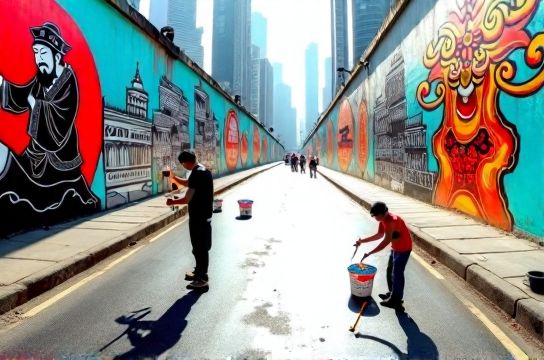
If you think Shanghai is all about skyscrapers and high-speed metro lines, think again. Tucked away in the Xuhui District, a quieter revolution has been unfolding—one painted in bold colors, wild typography, and unapologetic self-expression. Welcome to the heart of Shanghai's modern street art scene, where concrete walls whisper stories of rebellion, culture, and creativity.
The Rise of Urban Canvas
Gone are the days when graffiti was seen as vandalism. In Xuhui, once a quiet residential zone, street art has transformed alleyways into open-air galleries. From the historic lanes near Tianzifang to the revitalized industrial pockets around West Bund, artists have turned neglected walls into vibrant narratives.
According to a 2023 urban culture survey by Shanghai University, over 68% of locals view street art positively, seeing it as a form of cultural enrichment rather than defacement. This shift in perception has paved the way for city-backed mural projects and artist residencies.
Xuhui’s Hotspots: Where Art Meets Alley
Let’s break down the top three zones fueling this artistic wave:
| Location | Art Style | Artist Origin | Notable Features |
|---|---|---|---|
| Tianzifang Lanes | Mixed Media & Calligraffiti | Local + International | Narrow alleys, tourist-friendly, Instagram hotspots |
| West Bund Fuchuan Road | Large-Scale Murals | Mainland China + Europe | Industrial backdrop, biennale collaborations |
| Longteng Avenue Greenbelt | Eco-Themed Installations | Chinese Eco-Artists | Sustainability focus, interactive pieces |
These aren’t just random splashes of paint—they’re curated expressions. The West Bund, once a cluster of abandoned factories, now hosts the Shanghai Biennale satellite exhibits, drawing over 120,000 visitors annually.
Culture Clash or Cultural Fusion?
What makes Xuhui’s scene special is its blend of East-meets-West aesthetics. You’ll spot traditional shuimo (ink wash) techniques fused with urban stencil work, or Mao-era propaganda reimagined through pop surrealism.
Take the piece 'Neon Lotus' by local artist Lin Xiao—heavy on symbolism, light on permission. It blends Buddhist iconography with neon drip effects, sparking both admiration and debate. As Lin puts it: “The wall isn’t illegal—it’s liberated.”
Challenges on the Wall
It’s not all spray cans and sunshine. Gentrification looms large. As property values rise, some original artists are being priced out. A 2022 report noted that 40% of early murals in Xuhui have been removed due to redevelopment.
Yet, there’s hope. Initiatives like Walls of Xuhui, a public-private partnership, now designate legal zones for murals, offering stipends to artists. Transparency and community input are key—residents vote on proposed designs via WeChat polls.
How to Experience It Yourself
Ready to explore? Here’s your quick guide:
- Best Time to Visit: Weekday mornings (less crowded, better light for photos)
- Transport: Metro Line 10 (Tianzifang), Line 11 (West Bund)
- Pro Tip: Join a guided street art tour—many led by local artists themselves.
And don’t forget your camera. This isn’t just art; it’s a movement in motion.
Final Brushstroke
Xuhui’s street art isn’t merely decoration—it’s documentation. Every stroke captures the pulse of a city evolving, questioning, and creating. In a world where uniformity often wins, these walls shout individuality. So next time you’re in Shanghai, skip the mall. Get lost in an alley. You might just find the soul of the city, painted in day-glo pink and poetic resistance.