
China City Guide: A Cultural Journey Through Shanghai’s Expatriate History
- Date:
- Views:150
- Source:The Silk Road Echo
If you've ever strolled along the Bund, sipped espresso in a French Concession café, or marveled at the neon glow of Pudong's skyline, you've touched the soul of Shanghai—a city where East meets West in a dazzling cultural tango. But beyond the skyscrapers and shopping malls lies a deeper story: one of expatriate influence, colonial charm, and global fusion that shaped modern China.
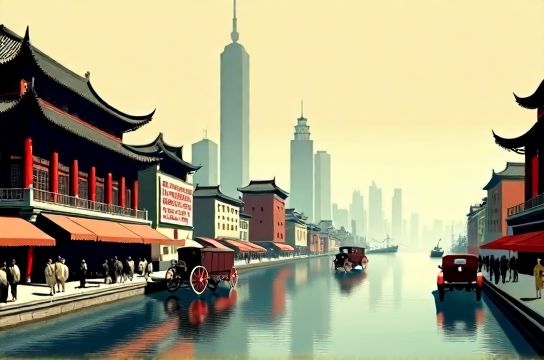
The Foreign Concessions: Where Shanghai Became Cosmopolitan
In the 19th century, after the Opium Wars, Shanghai opened its doors to foreign powers. The British, French, Americans, and later the Japanese carved out concessions—autonomous zones with their own laws, architecture, and lifestyles. By the 1930s, over 15,000 foreigners lived in Shanghai, turning it into Asia’s most international city.
Districts like the French Concession still whisper tales of Parisian elegance, while the Bund flaunts neoclassical banks built by British financiers. These weren’t just colonies—they were cultural incubators.
Expatriate Communities & Their Legacy
Each community left a unique fingerprint:
- British: Built the Shanghai Club (now Waldorf Astoria) and introduced cricket and afternoon tea.
- French: Laid tree-lined avenues, promoted Catholic missions, and brought wine and croissants.
- Americans: Established schools like Shanghai American School and boosted journalism with outlets like The North-China Herald.
- White Russians: Fled the Bolshevik Revolution; opened bakeries, ballet schools, and jazz clubs.
This melting pot birthed Shanghainese jazz, Eurasian cuisine, and a cosmopolitan mindset still visible today.
Historical Population of Expatriates in Shanghai (1845–1949)
| Year | Total Foreign Residents | Largest Nationalities | Key Events |
|---|---|---|---|
| 1845 | ~25 | British | Treaty of Nanjing opens Shanghai |
| 1860 | ~2,000 | British, American | Formation of International Settlement |
| 1900 | ~7,500 | British, Japanese, French | Expansion of French Concession |
| 1936 | ~65,000 | Russian, Japanese, British | Peak foreign presence before WWII |
| 1949 | ~1,000 | Mixed | Communist victory; mass expatriate departure |
Walking the Past: Must-Visit Heritage Sites
- The Bund (Zhongshan Road): 1.5 km of grand colonial architecture. Don’t miss No. 12—the former Hong Kong & Shanghai Bank building.
- Former French Concession: Wander streets like Wukang Road, dotted with villas and cafes in restored 1920s homes.
- Shanghai Jewish Refugees Museum: Honors the 20,000 Jews who fled Nazi Europe to live in Hongkou district.
- Astor House Hotel: Once hosted Einstein and Tagore—now a museum of foreign literary history.
Pro tip: Rent a vintage bicycle and explore at golden hour. The soft light on red bricks? Pure magic.
Modern Echoes of a Global Past
Today’s expats aren’t diplomats or traders—they’re tech entrepreneurs, artists, and educators. Yet they walk paths paved by history. Over 200,000 foreigners now call Shanghai home, drawn by opportunity and that same magnetic energy that lured settlers a century ago.
Cafés serve flat whites beside ancestral shrines. Jazz bands play Gershwin in underground lounges. And in neighborhoods like Xintiandi, ancient stone gates frame Michelin-starred dining.
Shanghai isn’t just remembering its past—it’s reinventing it.
Final Thoughts
To know Shanghai is to understand how foreign dreams and local resilience intertwined to create something entirely new. It’s a city built on bridges—between cultures, centuries, and continents. So next time you cross Suzhou Creek or sip tea in a colonial mansion, remember: you’re not just visiting a place. You’re stepping into a living story.