
Balancing Past and Present: How Xi’an Masters the Fusion of Ancient and Modern
- Date:
- Views:222
- Source:The Silk Road Echo
If you’re into cities that totally nail the whole ‘old meets new’ vibe, then Xi’an should be at the top of your list. Seriously, where else can you walk the same ancient city walls that guarded emperors over 600 years ago — and then grab a matcha latte from a hip café just steps away? This city in central China doesn’t just *have* history — it *lives* it, while still sprinting headfirst into the future.
Let’s start with the obvious: the Terracotta Army. You’ve seen the pics — thousands of life-sized warriors, each with their own face, stance, and serious side-eye. Discovered in 1974, this archaeological wonder is straight-up mind-blowing. But here’s the cool part — instead of treating it like some dusty relic, Xi’an uses it as a springboard for modern innovation. High-tech museums, VR tours, and interactive exhibits let visitors step into Emperor Qin Shi Huang’s world without ever leaving the present.
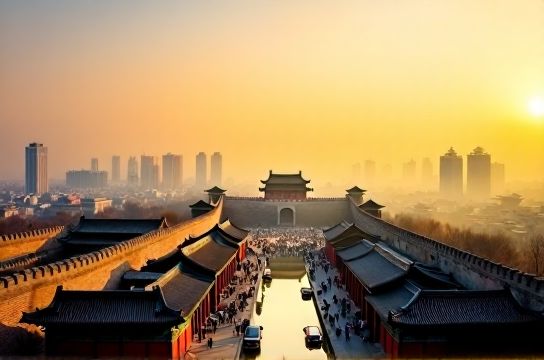
But there’s more to Xi’an than clay soldiers. The 14-kilometer-long ancient city walls? Still intact. You can rent a bike and cruise along the top, taking in views of both pagodas and skyscrapers. It’s like time travel with better snacks. Speaking of which — the Muslim Quarter is a food lover’s paradise. Dumplings, spiced lamb skewers, sweet rice wine — all served up in an alleyway buzzing with energy day and night. Tradition? Absolutely. Tourist trap? Maybe a little. Still worth it? 100%.
Now, don’t get it twisted — Xi’an isn’t stuck in the past. As a major hub on China’s Belt and Road Initiative, it’s become a hotspot for tech startups, education, and international business. Universities like Xi’an Jiaotong are pumping out brainpower, and companies are setting up shop thanks to government incentives and killer infrastructure. The high-speed rail zips you to Beijing in under five hours. That’s ancient capital to futuristic metropolis, faster than you can say ‘xièxie’.
What really sets Xi’an apart is how naturally it blends these worlds. Old temples sit beside sleek metro stations. Calligraphy artists sell their work near Apple Store windows. Even the streetlights in the historic districts are designed to echo Tang Dynasty aesthetics — talk about attention to detail.
Tourism plays a huge role, sure, but it’s not just about attracting visitors. It’s about identity. Locals take pride in their heritage while embracing change. You’ll hear Mandarin laced with the local Shaanxi dialect, see teens in Hanfu taking selfies by the Bell Tower, and catch underground bands playing gigs in repurposed courtyard homes.
So what’s the secret sauce? Smart urban planning, cultural respect, and a willingness to innovate without erasing the past. Other cities try to recreate charm; Xi’an was born with it. Whether you're a history geek, a foodie, or just love seeing how cities evolve, this place delivers.
In a world obsessed with the next big thing, Xi’an proves that sometimes, the best future is built on ancient ground.