
East Meets West: The Cultural Fusion Defining Shanghai’s Modern Identity
- Date:
- Views:245
- Source:The Silk Road Echo
Shanghai isn’t just China’s financial powerhouse—it’s a living, breathing love letter to cultural fusion. Walk down the Bund, and you’ll see Art Deco skyscrapers standing shoulder-to-shoulder with traditional Chinese architecture. Sip a latte in a French Concession café while a qipao-clad grandmother practices tai chi nearby. This city doesn’t just blend East and West—it redefines what that blend can be.
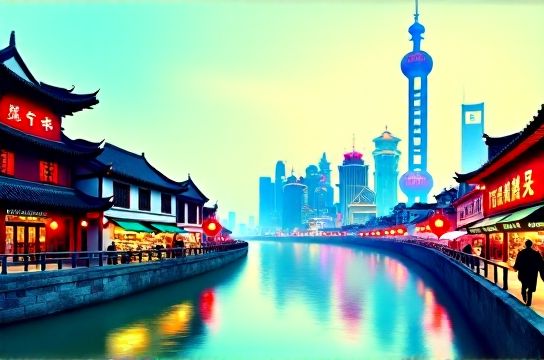
Once a small fishing village, Shanghai exploded into global prominence after opening as a treaty port in 1842. By the 1930s, it was dubbed the “Paris of the East,” home to international bankers, Russian exiles, and jazz musicians. Today, over 900,000 expats call Shanghai home—more than any other city in China—fueling a cosmopolitan culture that feels both futuristic and nostalgic.
Let’s break it down with some hard numbers:
| Cultural Element | Western Influence | Eastern Tradition | Fusion Example |
|---|---|---|---|
| Architecture | French mansions, Gothic churches | Suzhou-style gardens, temple roofs | Xintiandi’s restored shikumen with rooftop bars |
| Cuisine | Michelin-starred French bistros | Dumplings, braised pork (hongshao rou) | Truffle xiaolongbao at Ultraviolet |
| Fashion | Chanel flagship stores | Silk qipaos, embroidery | Designer labels merging cheongsam cuts with modern fabrics |
Food? Oh, it’s a full-on flavor revolution. You’ve got third-wave coffee shops serving yuzu flat whites next to century-old soup dumpling stalls. According to Shanghai Daily, the city boasts over 150,000 restaurants, with nearly 30% offering hybrid cuisine—think Peking duck tacos or matcha-infused mooncakes.
And let’s talk shopping. Nanjing Road is a sensory overload where luxury brands like Dior share sidewalks with street vendors selling scallion pancakes. But the real magic happens in neighborhoods like Jing’an, where concept stores mix vintage Mao memorabilia with Scandinavian minimalism.
The arts scene? Electric. The Power Station of Art, a repurposed power plant, hosts avant-garde exhibits that marry AI installations with classical ink painting. Meanwhile, on stage, productions like Kung Fu Panda: The Musical prove that cross-cultural storytelling isn’t just possible—it’s wildly popular.
So what makes Shanghai’s fusion so seamless? It’s not forced. It’s organic—a product of decades of exchange, adaptation, and mutual respect. Locals don’t see Western influence as a threat; they remix it, improve it, make it their own.
In a world where cultural boundaries are increasingly tense, Shanghai stands as proof that identity isn’t about choosing sides—it’s about building bridges. Whether you're here for business, pleasure, or just a killer bowl of ramen, one thing’s clear: Shanghai isn’t just where East meets West. It’s where they dance.