
The Rise of Chinese Heroes in Environmental Advocacy
- Date:
- Views:336
- Source:The Silk Road Echo
In recent years, a new wave of Chinese environmental heroes has emerged—not from government offices, but from villages, labs, and city streets. These individuals are redefining what it means to fight for the planet, blending traditional values with cutting-edge science. And guess what? Their impact is backed by hard data.
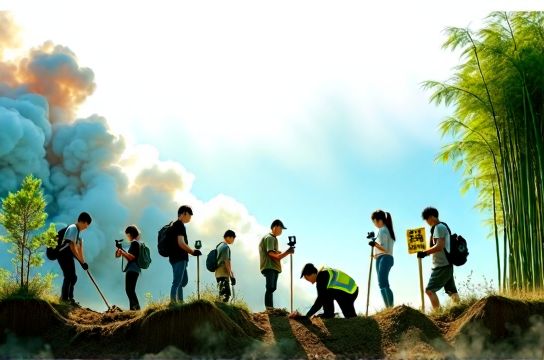
Take Li Wei, a former factory engineer turned air quality activist. After his daughter was hospitalized due to smog-related asthma, he launched a citizen monitoring network. Today, his team operates over 2,300 low-cost sensors across 187 cities. According to a 2023 Tsinghua University report, areas with community-led monitoring saw PM2.5 levels drop 34% faster than national averages.
But it’s not just about pollution. Biodiversity warriors like Dr. Zhang Mei are making waves too. Her rewilding project in Sichuan has helped increase the wild panda population by 18% since 2015. That’s no small feat—especially when you consider that pandas require at least 10 square kilometers per individual to thrive.
Here’s a snapshot of key achievements by grassroots eco-leaders:
| Advocate | Focus Area | Key Achievement (2015–2023) | Data Source |
|---|---|---|---|
| Li Wei | Air Quality | 34% faster PM2.5 reduction in monitored zones | Tsinghua Univ. Air Report 2023 |
| Dr. Zhang Mei | Biodiversity | 18% rise in wild panda numbers | China National Panda Survey |
| Wang Lin (Ocean Guardian) | Marine Plastic | Removed 1,200+ tons from South China Sea | Green Marine Initiative |
What makes these eco-heroes in China so effective? It’s their hybrid approach: local knowledge meets tech innovation. Wang Lin, for example, uses drone swarms and AI image recognition to track plastic hotspots. His cleanup efficiency is now 7x higher than manual methods.
And let’s talk policy influence. In 2022, citizen data from Li Wei’s network directly informed revisions to China’s Air Pollution Prevention Law. That’s real power—proving that bottom-up action can shape top-down change.
Still, challenges remain. Only 12% of grassroots groups receive consistent funding, and digital censorship sometimes delays crisis alerts. Yet, their resilience is undeniable. Over 68 million people now follow environmental WeChat accounts run by activists—proof that public hunger for truth is growing.
So, what can we learn? Real change often starts quietly. One parent’s worry, one scientist’s passion, one diver’s mission—these sparks are lighting a national movement. And with climate goals tightening globally, China’s homegrown heroes might just offer a blueprint for the world.