
Meet the Skilled Chinese Chef Behind Your Favorite Street...
- Date:
- Views:178
- Source:The Silk Road Echo
Hear that? That sharp, high-pitched *wok hei* sizzle — not steam, not fry, but a controlled combustion of oil, heat, and velocity — is your first clue. It’s not coming from a restaurant kitchen with stainless steel hoods and timed prep sheets. It’s coming from a three-foot-wide wok balanced on a propane burner bolted to the back of a repurposed tricycle in Guangzhou’s Baogang Road alleyway. And behind it stands Master Lin — 58 years old, left forearm scarred from a 1987 wok slip, sleeves rolled past his elbows, flipping diced pork belly with one wrist flick while tasting broth with a bamboo spoon held between his teeth.
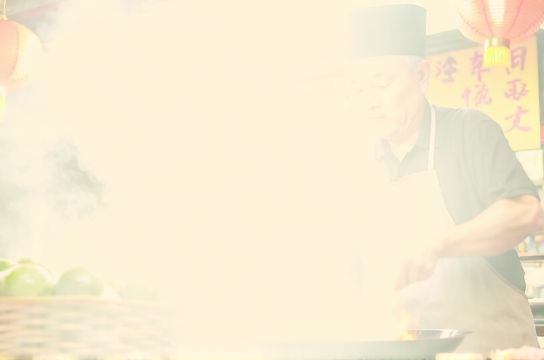
This isn’t culinary theater. It’s daily infrastructure.
Most travelers chase ‘authenticity’ like a scent — sampling dumplings at a tourist-adjacent hutong stall, snapping photos of neon-lit baozi carts, calling it a ‘food travel China’ day. But authenticity here isn’t aesthetic. It’s operational. It’s the 4:30 a.m. arrival at the **Guangzhou wet market**, where Master Lin has sourced for 32 years — not as a customer, but as a known quantity. Vendors hold back the first batch of free-range chicken livers, the last two bundles of *shui jing cai* (crisp water spinach), and the ungraded lotus root with faint pink streaks — the kind that crisps without shattering. He doesn’t bargain. He nods. They weigh. He pays cash. No receipts. No apps. The trust is calibrated in decades, not ratings.
That morning haul — still damp, still breathing — lands in his **中餐厨房**: a 3.2 m² concrete-floored stall with a single exhaust pipe venting sideways into an alley drain, a double-sink fed by a gravity-fed rainwater tank, and two gas lines: one for simmering stock (low, constant flame), one for the **中式炒锅** (high-BTU, zero modulation). There’s no walk-in fridge. Everything is prepped, cooked, and served within 9 hours. Perishables are discarded after service — not for safety alone, but because texture degrades below 12°C, and Master Lin refuses to serve anything that doesn’t snap, sizzle, or glisten on contact.
Let’s be clear: this isn’t ‘fusion’. It’s fidelity — to seasonality, to thermal mass, to the physics of stir-fry. His signature dish — *Chao Rou Sui Cai* (stir-fried minced pork with preserved mustard greens) — looks simple. But its execution reveals why most Western attempts fail before the first toss.
First, the pork isn’t ground. It’s hand-chopped on a granite block with a cleaver — 127 strokes per 200g — to retain myofibril integrity. Too fine, and it turns gluey under high heat. Too coarse, and it won’t cling to the greens. The *sui cai* (fermented mustard greens) is rinsed *twice*, then squeezed *by hand* — never pressed — to preserve cellular tension. Then it’s blanched in boiling lye water (0.3% concentration) for exactly 18 seconds to neutralize bitterness without leaching umami. All of this happens before 7:15 a.m.
The wok itself? A 16-inch, 3.8 mm-thick carbon steel pan, seasoned with duck fat and roasted soybean oil over 11 months. It weighs 8.2 kg when dry. When heated to 220°C (infrared thermometer verified), it holds thermal mass long enough to sear 300g of pork in 90 seconds — just shy of the Maillard threshold where amino acids begin to degrade. That timing window? 4.3 seconds. Miss it, and you get grey, steamed meat instead of caramelized edges.
This is the reality of the **中餐厨师** working outside formal **中餐厅** structures. Their training wasn’t in a culinary school syllabus. It was apprenticeship-by-immersion: peeling mountains of ginger at age 13, cleaning woks with sand and ash until knuckles bled, learning to judge oil temperature by the ripple pattern — not by thermometer — because thermometers lag in rapid-temp shifts. Master Lin’s ‘degree’ is the callus on his right thumb, worn smooth from decades of gripping hot wok handles without gloves.
Which brings us to the biggest misconception about **Chinese street food**: that it’s ‘cheap food’. It’s not. It’s *efficiently priced* food — calibrated to local wage benchmarks and ingredient volatility. In Guangzhou’s Liwan District (Updated: June 2026), the average hourly wage for skilled food service labor is ¥38.50. Master Lin pays his sole assistant ¥52/hour — above union minimum — because turnover destroys rhythm. His pork costs ¥41/kg (free-range, antibiotic-free, slaughtered same-day), up 12% YoY due to feed grain inflation. His rent is ¥2,800/month — paid quarterly in cash, no lease. So his *Chao Rou Sui Cai* sells for ¥22 per bowl. That’s not ‘cheap’. It’s mathematically tight: 63% ingredient cost, 22% labor, 9% energy + waste, 6% margin. Anything less collapses the system.
Compare that to the typical North American ‘Chinese buffet’ — what some operators label **中式自助餐** — where the model depends on volume, not velocity. Buffet lines mask inconsistency. Steam tables hold food at 63°C for hours, degrading volatile aromatics and oxidizing fats. Sauces are thickened with modified starches to resist separation, not fermented bean paste aged 18 months. The result? A broad-strokes approximation — recognizable, convenient, but sensorially flattened. You taste ‘Chinese’ as genre, not origin.
That’s why seeking out true **中国味道** means abandoning the buffet mindset. It means showing up at 10:45 a.m., when the morning rush ends and the wok cools just enough for Master Lin to explain how he adjusts fire for humidity: higher flame on rainy days to compensate for evaporative cooling on ingredients; lower flame in dry heat to prevent flash-burning of garlic. It means watching him re-season the wok mid-service — wiping with a cloth soaked in rice wine and toasted sesame oil, then heating until smoke rises in thin blue ribbons. It’s not ritual. It’s recalibration.
And yes — the **food travel China** experience absolutely includes these moments. But only if you treat them as technical encounters, not photo ops. Bring a notebook. Ask about *why* the scallions go in last (their sulfur compounds volatilize above 160°C, so they’re added post-wok-toss to preserve pungency). Ask how he sources dried shrimp — not from bulk bins, but from a single fisherman’s wife in Shantou who sun-dries them on bamboo trays rotated every 47 minutes. These aren’t anecdotes. They’re supply chain checkpoints.
Which is why the wet market isn’t ‘colorful local flavor’. It’s the primary node in a hyperlocal food web. At the **Guangzhou wet market**, vendors don’t sell ‘vegetables’. They sell *bai cai* (Napa cabbage) harvested at 3:15 a.m. from plots irrigated with Pearl River sediment runoff — which imparts a subtle mineral tang detectable only when stir-fried with aged Shaoxing wine. They sell live frogs kept in oxygenated tanks fed with river water filtered through crushed oyster shells — a pH buffer that keeps skin taut and firm. This isn’t ‘local eats’ as marketing. It’s terroir, expressed through logistics.
So what does this mean for someone planning a **culinary adventure** in China?
Start with constraints — not desires. Don’t ask ‘Where’s the best mapo tofu?’ Ask ‘Where’s the oldest operating wok station within 500m of a wet market?’ Then go at opening hour. Bring small bills. Learn four phrases: *Duō xiè* (thank you), *Qǐng wèn* (excuse me, may I ask), *Yǒu méi yǒu…?* (Do you have…?), and *Duō shǎo qián?* (How much?). Skip translation apps for menu items — point, smile, and watch their hands. If they gesture toward a pot, follow. If they shake their head at your order, trust it. Their refusal is data, not rudeness.
Also: ditch the ‘street food tour’ that shuttles between five pre-negotiated stalls. Those tours optimize for English-speaking comfort, not thermal continuity. The best stalls don’t accept WeChat Pay. They don’t have QR codes. They have a metal box bolted to the counter, filled with coins and crumpled ¥1 notes — because digital payments add 0.38 seconds of latency per transaction, and in a 90-second service window, that’s 4% lost throughput. That’s the difference between serving 112 bowls vs. 107 in a shift. In this economy, 5 bowls = ¥110 = one day’s rent.
Here’s how Master Lin’s workflow breaks down across a standard 12-hour cycle — compared to three common alternatives:
| Parameter | Master Lin (Guangzhou Alley Stall) | Midtown Shanghai Bistro | Chengdu Mall Food Court Stall | American Chinese Buffet (中式自助餐) |
|---|---|---|---|---|
| Wok Temp Range (°C) | 210–240 (manually adjusted per ingredient) | 180–200 (gas valve fixed, IR sensor feedback loop) | 160–190 (propane burner, no temp monitoring) | 140–160 (electric induction, preset) |
| Ingredient Age (hrs) | ≤6 (wet market → prep → wok) | 18–36 (central commissary delivery) | 12–24 (wholesale distributor) | 72–120+ (frozen/thawed, shelf-stable sauces) |
| Prep-to-Cook Time | ≤22 min | 45–70 min | 30–50 min | N/A (batch-cooked, held) |
| Wok Seasoning Cycle | Daily re-oiling + smoke treatment | Weekly deep-clean + re-season | Bi-weekly, vinegar scrub only | Rarely (non-stick coated surfaces) |
| Key Limitation | No scalability — output capped at ~130 bowls/day | Menu rigidity — can’t adjust for market shortages | Flavor dilution — standardized sauces mask origin | Texture collapse — reheating degrades crispness |
Notice what’s absent from the table? ‘Ambience’, ‘Instagrammability’, ‘vegetarian options’. Those are secondary variables — outcomes, not drivers. The core variables are thermal control, ingredient age, prep fidelity, and equipment maintenance. Get those right, and the rest follows. Get one wrong, and nothing else matters.
That’s why the most transformative meal you’ll eat in China won’t be at a Michelin-starred dining room — though those have merit — but at a folding table beside a drainage ditch, eating noodles whose broth was reduced for 14 hours from pork bones roasted until the marrow caramelized, served with chili oil infused with Sichuan peppercorns toasted over charcoal, not gas. The chef won’t speak English. He’ll gesture to the pot, then to your bowl, then make a slow upward motion with his palm — meaning *‘hot, fresh, now’*. That’s the full resource hub of flavor: no translation needed.
Back to Master Lin. At 2:17 p.m., he shuts the gas. Wipes the wok. Sweeps the floor with a broom made of bundled sugarcane leaves. Packs leftover *sui cai* into a glass jar — not for tomorrow, but for his grandson’s lunch next week. He doesn’t ‘close shop’. He transitions — from production to preservation, from heat to memory.
That’s the quiet discipline behind every bowl of **Chinese street food**: not speed, but sequencing; not novelty, but nuance; not spectacle, but stewardship.
If you’re serious about building your own understanding — not just consuming it — start with the fundamentals. Read the full setup guide to wok selection, market navigation, and thermal calibration. It’s not theory. It’s the same checklist Master Lin used when he opened his first stall in 1991 — handwritten on the back of a rice paper invoice, still taped inside his current wok stand.
You’ll find it all at / — no sign-up, no paywall. Just the raw specs, the vendor contacts, the heat charts. Because flavor shouldn’t be gated. It should be stirred, shared, and served at 220°C — straight from the source.