
Daily Commutes and Coffee vs Tea in China Cities
- Date:
- Views:236
- Source:The Silk Road Echo
Let’s spill the beans — or should we say, steep the leaves? In China’s bustling cities, the rhythm of daily commutes dances hand-in-hand with caffeine culture. From Shanghai’s subway rush to Chengdu’s slow-lane chai moments, urbanites are sipping their way through traffic jams, deadlines, and dreams.
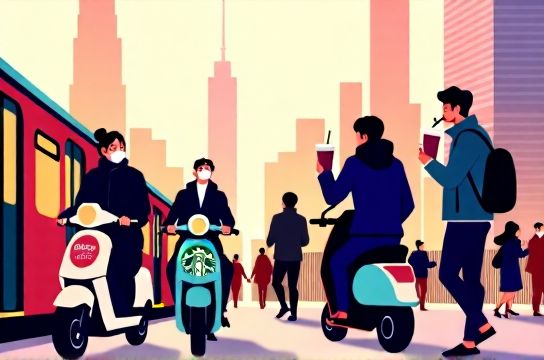
Recent surveys show that over 65% of white-collar workers in Tier-1 Chinese cities rely on a morning brew to kickstart their day. But here’s the twist: while coffee shops like %90 Starbucks and %90 Luckin expand at lightning speed, traditional tea isn’t stepping back — it’s evolving.
Coffee Rush on the Commute
In Beijing, the average commute time clocks in at 47 minutes one-way (China Urban Transport Annual Report, 2023). That’s prime time for a takeaway latte. Luckin Coffee knows this well — with over 8,200 stores in China, they’ve built a mobile-first model perfect for commuters. One app tap, grab-and-go espresso: it’s not just convenience, it’s lifestyle.
Yet, Western-style coffee isn’t dominating unchallenged. Local tastes adapt fast. Try a Red Date Mocha or Dragon Pearl Latte — these fusion drinks blend global trends with local flavors, making up nearly 30% of specialty menu sales in 2023.
Tea: The Steady Pulse of Tradition
Meanwhile, tea remains the soul of Chinese drink culture. Over 80% of households still keep loose-leaf tea at home. But younger generations aren’t brewing gongfu cha every morning. Enter bottled tea brands like %90 Nestea and homegrown %90 Qingting. Ready-to-drink (RTD) tea sales surged by 12.7% YoY, reaching $6.3 billion in 2023 (Euromonitor).
What’s more, bubble tea chains like Heytea and Mixue Ice Cream & Tea have redefined on-the-go sipping. With store counts surpassing 20,000 nationwide, they’re often closer than a metro station.
Commuting Caffeine: By the Numbers
So how do city dwellers really choose their brew? Check out this breakdown:
| City | Avg. Commute Time (min) | Coffee Shops per 10k People | Tea Consumption (kg/person/year) |
|---|---|---|---|
| Shanghai | 49 | 4.8 | 1.2 |
| Beijing | 47 | 4.5 | 1.0 |
| Guangzhou | 42 | 3.9 | 1.8 |
| Chengdu | 40 | 3.2 | 2.1 |
Notice a trend? Southern and western cities drink more tea, while northern hubs lean slightly toward coffee — but both coexist.
The Final Sip
China’s caffeine scene isn’t a battle between coffee and tea. It’s a blend. Commuters want speed, flavor, and identity. Whether it’s a paper cup of soy milk latte or a thermos of jasmine tea, each sip tells a story of modern life racing forward — without forgetting where it came from.
So next time you're stuck in the morning crush, look around. That quiet guy in the corner? He might be holding more than a drink — he’s holding a culture in transition.