
Immersing in Tea Culture China's Daily Rituals
- Date:
- Views:219
- Source:The Silk Road Echo
If you've ever sipped a warm, fragrant cup of oolong while overlooking misty Fujian hills, or watched an elderly vendor pour tea with Zen-like precision at a Beijing hutong stall, you've touched the soul of Chinese tea culture. More than just a drink, tea in China is rhythm, ritual, and relationship—steeped into everyday life like the leaves themselves.
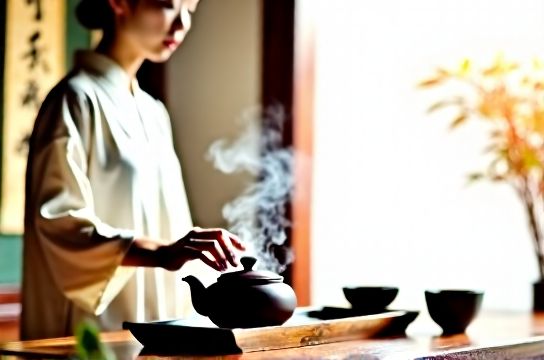
Over 1.3 billion cups are consumed daily across China—that’s nearly one cup per person, every single day (China Tea Marketing Association, 2023). But it’s not about quantity. It’s about quality, tradition, and the quiet art of slowing down in a fast-moving world.
The Heartbeat of the Household
In Chinese homes, tea isn’t reserved for guests. It’s the morning alarm, the midday reset, and the evening wind-down. Families often keep a gaiwan (a lidded bowl) or a Yixing clay pot on the table—always warm, always ready. Green tea like Longjing starts the day fresh and crisp, while aged Pu-erh soothes digestion after dinner.
Teahouses: Where Time Brews Slowly
Cities like Chengdu and Hangzhou boast centuries-old teahouses where retirees play mahjong, students read novels, and business deals happen over tiny porcelain cups. In Chengdu alone, there are over 3,000 traditional teahouses, each serving as community hubs where conversation flows as freely as the tea.
A Sip Through History
Tea drinking dates back over 5,000 years to Emperor Shennong, who allegedly discovered tea when leaves blew into his boiling water. Fast forward to the Tang Dynasty (618–907 AD), and Lu Yu wrote The Classic of Tea—the first definitive guide to tea cultivation, preparation, and philosophy.
Today, six main types dominate the scene:
| Type | Oxidation Level | Caffeine (mg/cup) | Popular Examples |
|---|---|---|---|
| Green Tea | Unoxidized | 20–35 | Longjing, Biluochun |
| Oolong Tea | Partially oxidized (10–80%) | 30–50 | Daan Wulong, Tieguanyin |
| Black Tea (Red Tea) | Fully oxidized | 40–60 | Keemun, Lapsang Souchong |
| Pu-erh Tea | Fermented & aged | 50–70 | Ripe (Shou) & Raw (Sheng) |
| White Tea | Minimally processed | 15–30 | Baicha, Yin Zhen |
| Yellow Tea | Slight oxidation | 20–35 | Huangya, Junshan Yinzhen |
The Gongfu Cha Experience
To truly immerse yourself, try Gongfu Cha—the “tea with skill” ceremony. Using small pots and multiple short steeps, each infusion reveals new layers of flavor. A single session can yield 10+ brews from the same leaves, evolving from floral to earthy to sweet.
Pro tip: When visiting a local family, accept tea with both hands—it’s a sign of respect. And never fill your cup all the way; three-quarters shows humility.
Why This Ritual Still Matters
In a digital age, Chinese tea culture offers mindfulness before the word was trendy. It teaches patience, presence, and connection. Whether you're in a bustling Shanghai mall or a quiet village courtyard, the act of sharing tea remains a silent promise: I am here. I see you. Let’s breathe together.