
Why Chinese Elderly Love Square Dancing Daily
- Date:
- Views:250
- Source:The Silk Road Echo
If you've ever wandered through a Chinese city park at dawn or dusk, you've probably seen them: groups of older adults moving in perfect rhythm, fans in hand, beats blasting from portable speakers. This is square dancing — not just exercise, but a cultural phenomenon sweeping across China. But why do millions of Chinese seniors embrace it so passionately? Let’s dive into the rhythm behind the routine.
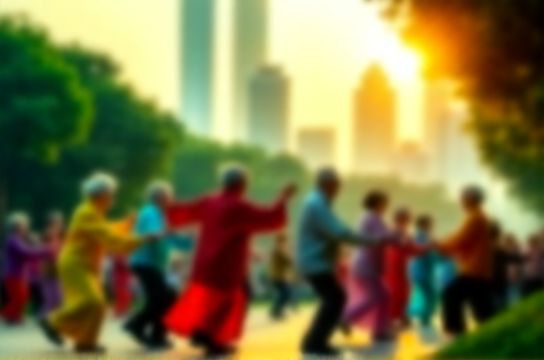
The Heartbeat of Community
Square dancing isn’t just about fitness — it’s about connection. In fast-urbanizing China, where families often live apart and loneliness among the elderly is rising, these dance circles offer something priceless: belonging. According to a 2022 survey by the National Bureau of Statistics, over 65 million people aged 60+ participate in square dancing regularly — that’s nearly 40% of urban seniors!
| Age Group | Regular Participants (Millions) | Primary Motivation |
|---|---|---|
| 60–69 | 48.2 | Social Interaction (76%) |
| 70–79 | 14.5 | Physical Health (68%) |
| 80+ | 2.3 | Mental Well-being (59%) |
More Than Just a Workout
Let’s be real — not everyone loves the loud music or the early-morning routines. But for dancers, the benefits go way beyond cardio. Studies from Peking University show that regular participants report 30% lower stress levels and a 25% improvement in sleep quality. The mix of repetitive motion, music, and group coordination acts like a natural antidepressant.
And let’s talk moves. From traditional folk dances to pop remixes of Jay Chou songs, the choreography keeps evolving. Some groups even compete nationally — yes, there are square dance championships with thousands in attendance!
Cultural Roots & Modern Twist
Square dancing has roots in Mao-era mass exercises, but today’s version is a vibrant blend of nostalgia and modernity. It’s low-cost, accessible, and requires no gym membership. All you need? Comfortable shoes and a willingness to move.
Local governments have caught on too. Over 12,000 public squares now have designated dance zones with regulated volume and hours, according to China's Ministry of Housing and Urban-Rural Development. Some cities even offer free classes and choreography workshops.
Challenges & Harmony
Of course, it’s not all harmony. Noise complaints from younger residents have sparked debates — leading to innovations like Bluetooth-enabled earphones for entire groups. In Shenzhen, one community uses silent disco tech so only dancers hear the beat. Talk about a quiet revolution!
Still, the overwhelming sentiment? Support. A 2023 Tencent survey found that 61% of younger urbanites view square dancing positively, seeing it as a symbol of active aging.
Final Thoughts: Rhythm of Resilience
Square dancing is more than a pastime — it’s a statement. For China’s elderly, it’s autonomy, joy, and social power expressed through movement. As life expectancy rises and cities grow, this daily ritual will likely keep pulsing through parks, proving that sometimes, the best therapy comes with a catchy beat.