
The Art of Tea Culture in China's Countryside
- Date:
- Views:237
- Source:The Silk Road Echo
Forget the hustle of city life—China’s countryside is where tea culture truly breathes. From misty hillsides to ancient villages, tea isn’t just a drink here; it’s a way of life, passed down through generations like a whispered secret between kin.
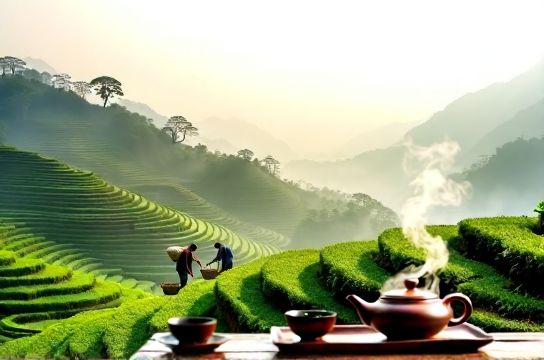
If you’ve ever sipped oolong under a bamboo grove or watched elders roll tea leaves by hand, you know: this isn’t about caffeine. It’s about connection—to land, to history, to silence.
The Heartbeat of Rural Tea Culture
In provinces like Fujian, Yunnan, and Zhejiang, tea farming dates back over a thousand years. But rural tea culture goes beyond harvests. It’s in the morning ritual of boiling spring water, the slow pour into tiny clay pots, and the shared cups during family meals.
Take Anxi County in Fujian—the birthplace of Tieguanyin, a fragrant oolong known as 'Iron Goddess of Mercy.' Here, nearly 80% of households are involved in tea cultivation. Families rise before dawn to tend bushes that grow on terraced slopes kissed by mountain fog.
Tea Varieties & Their Rural Roots
Each region has its crown jewel. Let’s break it down:
| Tea Type | Region | Harvest Season | Caffeine Level | Flavor Profile |
|---|---|---|---|---|
| Tieguanyin (Oolong) | Anxi, Fujian | Spring & Autumn | Medium | Floral, creamy, with orchid notes |
| Pu-erh (Fermented) | Xishuangbanna, Yunnan | Year-round | High | Earthy, woody, complex |
| Longjing (Green) | Hangzhou, Zhejiang | Early Spring | Low-Medium | Nutty, fresh, chestnut-like |
This isn’t mass production. Most rural farms use organic methods, avoiding pesticides to preserve flavor and soil health. In fact, a 2023 study found that **smallholder tea farms** in Yunnan had 30% higher biodiversity than commercial plantations.
A Day in the Life: Tea Farmers’ Rhythm
Mornings start at 5 AM. Farmers head to the fields with wide-brimmed hats, plucking only the top two leaves and a bud—a technique called 'two leaves and a tip.' One skilled picker can gather about 4–6 kg daily, which yields just 1 kg of finished tea after processing.
Back at home, the leaves are spread on bamboo trays to wither. Then comes oxidation control, roasting, and rolling—all done by hand or with simple machines. The entire process takes 12–48 hours, depending on the tea type.
Why This Culture Matters
Rural tea culture is quietly fighting modernization. As young people move to cities, elders keep traditions alive. But there’s hope: eco-tourism and direct-to-consumer sales are giving small farms new life.
Visitors can now join tea-picking tours, learn gongfu brewing, or stay in village homestays. These experiences don’t just educate—they sustain. A single tourist spending $100 on a tea tour can support a family for days.
How to Experience It Authentically
- Visit during harvest season (March–April for green tea, September–October for oolong).
- Stay in a tea village—places like Xinyang (Henan) or Pu’er City (Yunnan) offer immersive stays.
- Learn the gongfu method: Use small teapots, multiple short steeps, and savor each infusion.
- Buy directly from farmers to ensure fair pay and freshness.
Tea in China’s countryside isn’t performative—it’s lived. It’s in the calloused hands that shape the leaves, the steam rising from a kettle at sunset, and the quiet pride in sharing a cup with a stranger.
So next time you brew a cup, ask yourself: Where did this come from? Who grew it? What story does it carry?
Because real tea culture isn’t just tasted. It’s felt.