
Tea Picking in Hangzhou: A Farmer’s Dawn on Longjing Hill
- Date:
- Views:228
- Source:The Silk Road Echo
If you've ever sipped a cup of Longjing (Dragon Well) tea and wondered where that buttery, nutty flavor comes from, let me take you to the misty slopes of Longjing Hill at 5:30 AM. This isn’t just farming — it’s poetry in motion, a centuries-old rhythm between hand and leaf.
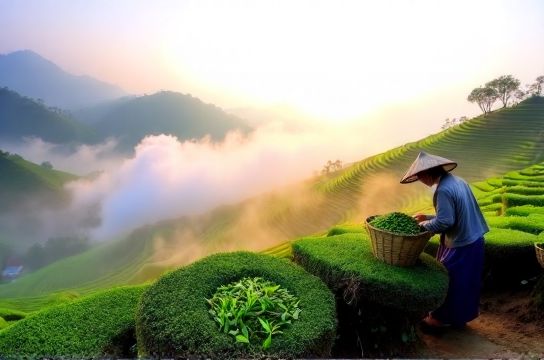
Hangzhou’s Longjing tea is one of China’s Ten Famous Teas, with records dating back to the Tang Dynasty. But nothing compares to experiencing tea picking firsthand. I joined local farmer Auntie Lin during the spring harvest — the most prized season — and what I learned changed how I see every cup.
The magic lies in precision. Only the ‘one bud, one leaf’ pluck is acceptable, and each picker averages just 1–2 kilograms per day. That’s why premium Longjing can cost over $1,000 per kilo. Machines? Forget it. Human touch ensures zero damage and perfect timing.
Why Spring Matters
Spring tea, especially pre-Qingming (before April 4th), has lower bitterness and higher amino acids. Here’s how harvest time affects quality:
| Harvest Period | Caffeine (mg/g) | Amino Acids (mg/g) | Price Range (USD/kg) |
|---|---|---|---|
| Pre-Qingming | 28 | 4.6 | 800–1,200 |
| Post-Qingming | 35 | 3.2 | 400–600 |
| Summer Pick | 42 | 2.1 | 100–200 |
As Auntie Lin says, “The early bud is tender, like a baby’s whisper.” She earns about $30 a day during peak season — not much, but for her, it’s heritage.
How to Experience It Yourself
Want to try? Several eco-farms near Meijiawu Village offer morning picking tours (¥150–200). You’ll learn the pinch-and-pluck technique, then roast your harvest over a wok — yes, real fire! Pro tip: book between March 20 and April 10 for the best experience.
And when you sip your handmade tea later? That grassy sweetness, the faint chestnut aroma — you won’t just taste flavor. You’ll taste dawn on Longjing Hill.