
From Farm to Table: A Day in the Life of a Yangtze River Village
- Date:
- Views:218
- Source:The Silk Road Echo
Ever wondered where your morning bowl of rice or that fresh fish on your plate really comes from? Let’s take a sunrise-to-sunset journey through a quiet village nestled along the mighty Yangtze River—where tradition, nature, and daily hustle blend into one beautiful rhythm.
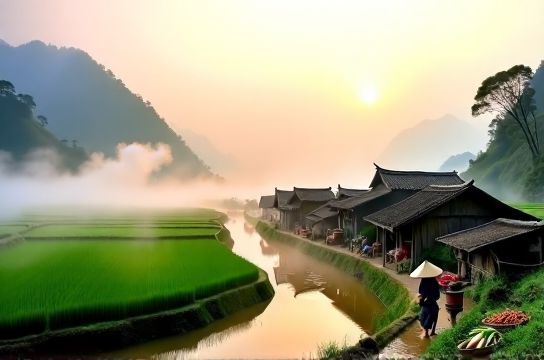
Meet Li Wei, a third-generation farmer in Xiangyang Village, Hubei Province. His day starts at 5:30 AM with the crow of the rooster and ends under a star-strewn sky after harvesting, fishing, and tending to his family’s small organic farm. This isn’t just farming—it’s a way of life passed down for generations.
The Yangtze River basin feeds over 400 million people, producing nearly 60% of China’s total grain output. In villages like Li Wei’s, agriculture isn’t industrial—it’s intimate, sustainable, and deeply connected to seasonal cycles.
A Glimpse Into the Daily Grind
By 6:00 AM, Li Wei is knee-deep in his rice paddies. The air is thick with mist, and dragonflies dart over flooded fields. He uses traditional wooden plows pulled by water buffalo—a method slower than machines but gentler on the soil.
Later, he heads to the riverbank to check his bamboo fish traps. The Yangtze is home to over 350 fish species, though numbers have declined due to overfishing and dams. Still, local families rely on sustainable catch methods to preserve both livelihood and ecosystem.
Farm-to-Table, the Authentic Way
Lunch is simple but rich: steamed rice, pickled vegetables, and freshly caught bream pan-fried with ginger and scallions. Everything is grown or caught within a 2-kilometer radius. No plastic packaging. No carbon-heavy transport. Just pure, unprocessed flavor.
Here’s how a typical day’s harvest breaks down:
| Crop/Fish | Daily Yield (kg) | Used For | Sold Locally (CNY/kg) |
|---|---|---|---|
| Rice (unmilled) | 15 | Family meals, storage | 8 |
| Bok Choy | 10 | Cooking, market sale | 6 |
| Crucian Carp | 7 | Meals, local restaurant supply | 20 |
| Ginger | 3 | Seasoning, herbal use | 15 |
This hyper-local economy keeps food miles near zero and supports community resilience. Plus, tourists are starting to notice. Eco-tours and farm stays have increased by 35% since 2022, offering travelers a taste of real rural China.
As the sun dips below the riverbanks, Li Wei lights a lantern outside his home. Dinner is shared with neighbors—rice porridge simmered with lotus seeds, a dish unchanged for centuries.
In a world obsessed with speed and scale, the Yangtze River village reminds us: sometimes, the most powerful meals aren’t found in Michelin-starred restaurants—but in the quiet moments between planting, catching, and sharing.