
Tea Temples and Everyday Rituals: Exploring China's Tea Culture Beyond the Ceremony
- Date:
- Views:210
- Source:The Silk Road Echo
When you think of Chinese tea, your mind might drift to elegant gongfu cha ceremonies, porcelain pots steaming with oolong, or monks sipping in mountain temples. But real tea culture? It’s not just in rituals—it’s in the morning thermos a Beijing grandpa carries, the office worker’s quick brew between Zoom calls, and the late-night chats over pu’erh in Chengdu teahouses.
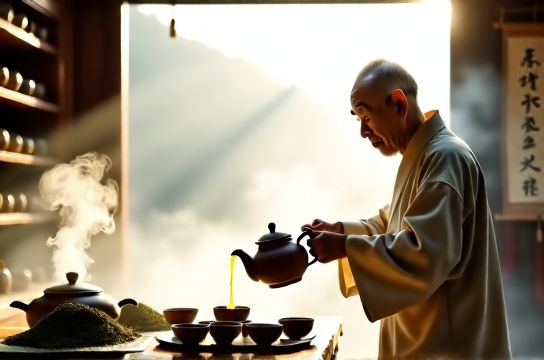
China produces over 3 million tons of tea annually—nearly 40% of the world’s supply (FAO, 2023). From Yunnan’s ancient tea trees to Fujian’s misty hills, tea isn’t just a drink; it’s a rhythm of life.
The Daily Grind: How Real People Drink Tea
In Shanghai, office workers grab lóngjǐng (Dragon Well) in biodegradable cups from street vendors. In Guangzhou, dim sum meals end with strong kāiluó black tea to cut through the oil. And in Xi’an? A bowl of mǎnnóng milk tea, spiced and thick, warms winter mornings.
Forget the myth that all Chinese tea is delicate and quiet. Street-level tea culture is bold, practical, and full of flavor.
Tea by the Numbers: A Regional Snapshot
| Region | Signature Tea | Annual Output (tons) | Local Ritual |
|---|---|---|---|
| Fujian | Tieguanyin (Oolong) | 450,000 | Gongfu brewing, 7 steepings |
| Yunnan | Pu’erh (Fermented) | 180,000 | Aged like wine, shared at gatherings |
| Zhejiang | Longjing (Green) | 28,000 | Spring harvest, hand-picked |
| Sichuan | Mengding Ganlu (Green) | 35,000 | Served in bamboo cups at teahouses |
From Temple to Takeout: The Evolution of Ritual
Yes, Buddhist monasteries still serve tea as meditation aid—light, fragrant white teas in silent halls. But today’s ritual is just as likely to be a Gen Z barista in Hangzhou crafting matcha lattes with panda art foam.
Modern tea houses blend old and new. In Nanjing, Tea Lab lets you customize water temperature and steep time via app. Meanwhile, traditional spots like Chengdu’s Heming Teahouse pack locals into courtyard spaces where sparrows chirp above clay pots.
What stays constant? The pause. Whether it’s 30 seconds or 30 minutes, tea creates space in a fast-moving world.
How to Experience Authentic Tea Culture (Without Being a Snob)
- Visit a local market: Skip the tourist shops. Hit a wet market—look for unmarked stalls with older folks queuing.
- Try ‘broken leaf’ tea: Loose-leaf doesn’t have to be perfect. Some of the best flavors come from humble, crumpled leaves.
- Ask for ‘rénjiān wèidào’ (人间味道)—‘the taste of human life.’ Vendors love sharing stories behind their brews.
Chinese tea culture isn’t about perfection. It’s about presence. So next time you sip, don’t worry about the right cup or temperature. Just breathe, taste, and remember—you’re part of a 5,000-year conversation.