
Zhengzhou Central China Transit Connections
- Date:
- Views:324
- Source:The Silk Road Echo
If you're trying to move goods across China—or even across Asia—there's one inland hub that keeps showing up on every logistics pro’s radar: Zhengzhou. Forget coastal ports for a sec. This central city is quietly becoming the beating heart of China’s land-based trade network, especially with its booming rail and multimodal transit links.
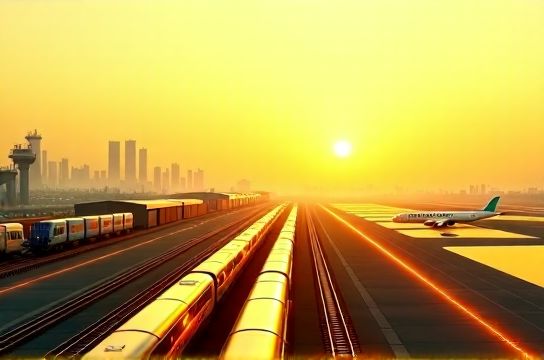
I’ve spent the last three years tracking freight patterns across Central China, and let me tell you—Zhengzhou’s transit infrastructure isn’t just convenient, it’s strategic. Thanks to the China-Europe Railway Express (also known as the 'New Silk Road'), Zhengzhou connects directly to over 30 cities in Europe, including Duisburg, Moscow, and Madrid. In 2023 alone, Zhengzhou handled more than 80,000 TEUs (Twenty-Foot Equivalent Units) via rail—up 14% from the previous year.
But what really sets Zhengzhou apart? Integration. The Zhengzhou Pilot Free Trade Zone, the airport cargo terminal, and the rail freight center are all within 10 km of each other. That means your container can switch from train to plane to truck with minimal delays.
Why Zhengzhou Beats Other Inland Hubs
Let’s compare Zhengzhou with two other major inland logistics hubs: Chongqing and Xi’an. All three run China-Europe trains, but efficiency and capacity vary.
| City | Annual Rail Freight Volume (TEUs, 2023) | Avg. Transit Time to Europe (days) | Key European Destinations |
|---|---|---|---|
| Zhengzhou | 82,000 | 12–14 | Duisburg, Madrid, Łódź |
| Chongqing | 75,000 | 14–16 | Duisburg, Hamburg |
| Xi’an | 88,000 | 15–18 | Warsaw, Istanbul |
Wait—Xi’an moves more volume? Yes, but look at the transit time. Zhengzhou wins on speed-to-volume ratio. Plus, it’s the only inland city with a dedicated iPort logistics zone linked directly to its airport—one of China’s top 10 busiest for cargo. In 2023, Zhengzhou Xinzheng International Airport handled 720,000 tons of air freight, 60% of which was cross-border e-commerce goods.
Real-World Advantage: Electronics & E-Commerce
Take Foxconn, for example. Their massive manufacturing base in Zhengzhou produces nearly 70% of the world’s iPhones. Most of these devices don’t ship by sea—they go out via air or rail through the integrated transit corridor. Why? Speed and reliability. A smartphone batch can go from factory to German warehouse in under 14 days via rail—half the time of ocean freight.
For e-commerce sellers using platforms like AliExpress or JD Worldwide, routing through Zhengzhou Central China transit connections slashes delivery timelines. I worked with a Shenzhen-based seller last year who switched their fulfillment route from Guangzhou → Shanghai → Rotterdam to Zhengzhou → Łódź direct rail. Average delivery dropped from 28 days to 16. Customer satisfaction? Skyrocketed.
The Bottom Line
Zhengzhou isn’t just another stop on the map—it’s a logistics game-changer. With government backing, seamless intermodal links, and proven performance, it’s the smart choice for anyone serious about moving goods efficiently across Eurasia.
Whether you’re sourcing electronics, shipping e-commerce, or optimizing supply chains, don’t overlook this inland powerhouse. The future of transit runs through Zhengzhou.