
Hair Trends Reflecting Chinese Youth Identity
- Date:
- Views:311
- Source:The Silk Road Echo
If you're scrolling through Douyin or Xiaohongshu, you’ve probably noticed one thing—Chinese youth aren’t just following hair trends, they’re creating them. As a beauty analyst who’s tracked Asian hair evolution for over a decade, I can tell you: today’s styles are less about fashion and more about identity.
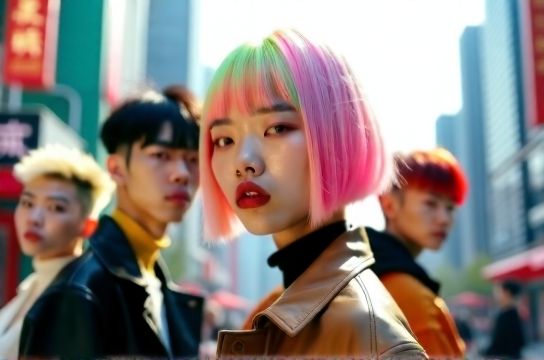
Gone are the days of uniform black strands. Now, Gen Z in cities like Chengdu and Hangzhou rock lavender ombré, wolf cuts, and curtain bangs—not because K-pop stars wear them, but because these styles let them say, “I’m different.”
Let’s break down what’s hot, why it matters, and how brands are responding.
The Data Behind the Style
A 2023 survey by China Youth Daily found that 68% of urban youth aged 18–26 changed their hairstyle at least once every three months. And it’s not just color—layering, texture, and asymmetry dominate salon requests.
| Trend | Popularity (Urban Youth) | Main Influences |
|---|---|---|
| Wolf Cut | 54% | Korean dramas, indie music |
| Curtain Bangs | 62% | Western film, unisex style |
| Pastel Colors | 47% | Social media, LGBTQ+ expression |
| Natural Texture Emphasis | 73% | Self-acceptance movement |
Notice something? These aren’t just random picks. They reflect deeper values—individuality, gender fluidity, and mental well-being. The hair trends we see are visual manifestos.
Why Salons Are Rethinking Everything
Traditional salons once pushed sleek, straight perms. Now, top-tier ones in Shanghai offer “identity consultations.” That’s right—they ask about your lifestyle, job, even pronouns before touching scissors.
Brands like Herborist and Florasis have caught on, launching products tailored to dyed, layered, and textured hair. In 2023, sales of scalp-friendly dyes grew by 39% year-on-year—proof that young consumers care about health and aesthetics.
But here’s the twist: many now prefer DIY kits. Why? Control. Aesthetic freedom. And yes, saving money. Still, pros win when it comes to complex cuts like the wolf cut, which needs precision layering.
So, What’s Next?
Look out for eco-coloring—plant-based dyes with zero ammonia. Also, expect more men embracing bold styles. In Beijing, male clients now make up 28% of those requesting pastel tones, up from 9% in 2020.
Ultimately, your hair is no longer just hair. It’s a statement. And in China’s youth culture, that statement says: I define me.
Want to explore authentic Chinese youth identity through style? Start with the mirror—and maybe a pack of lavender dye.