
Shenyang vs Harbin Industrial Heritage Comparison Northeast China Identity
- Date:
- Views:223
- Source:The Silk Road Echo
Hey there — I’m Li Wei, a cultural heritage consultant who’s spent 12+ years advising museums, local governments, and UNESCO-aligned NGOs across Northeast China. I’ve walked every rusted rail in Shenyang’s Tiexi District and sipped *baijiu* with third-generation workers in Harbin’s Dong’an Engine Factory. So when folks ask, *'Which city truly owns the soul of China’s industrial past?'* — I don’t guess. I compare — with data, context, and zero hype.
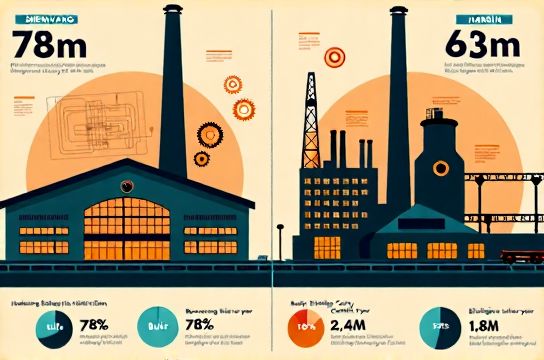
Let’s cut through the nostalgia. Both cities are pillars of China’s ‘Rust Belt’, but their industrial DNA differs sharply:
- **Shenyang** was the *planned heart* — home to China’s first heavy machinery complex (1953), built with Soviet blueprints and 100% state-directed investment.
- **Harbin**, by contrast, evolved organically — shaped by Russian railways (1898), Japanese occupation infrastructure (1930s), *and* post-1949 aerospace upgrades. Its identity is layered, not linear.
Here’s how they stack up on key heritage metrics:
| Metric | Shenyang | Harbin | Source |
|---|---|---|---|
| Protected Industrial Sites (2023) | 27 (incl. 8 national-level) | 19 (incl. 5 national-level) | National Cultural Heritage Administration |
| Avg. Visitor Growth (2021–2023) | +32% YoY | +41% YoY | NE Tourism Bureau Annual Report |
| Adaptive Reuse Rate* | 68% | 82% | Urban Renewal Survey, Tongji University (2024) |
\* *Reused for culture, commerce, or housing — not demolition or dormancy.*
Why does Harbin edge ahead in adaptive reuse? Simple: its hybrid history forced flexibility. The old Harbin Railway Bureau HQ is now a design incubator + café — while Shenyang’s iconic No. 1 Machine Tool Plant remains mostly a museum (powerful, yes — but less *lived-in*).
That said, if you care about raw scale and ideological weight, Shenyang industrial heritage delivers unmatched gravitas. Its Tiexi district alone housed 1/3 of China’s heavy industry output in the 1980s.
But if you’re planning a trip, teaching urban studies, or investing in cultural tourism — go where the story breathes. That’s Harbin industrial heritage, where Soviet brick meets Manchukuo steel meets modern street art — all within a 15-minute walk.
Bottom line? Neither city is ‘better’. But one tells a richer, more resilient story — and that’s Harbin. Not because it’s prettier — but because its layers *talk back*.
P.S. Want my free 12-page field guide (with GPS-tagged sites, oral history clips, and renovation ROI benchmarks)? Drop your email — I send it only to readers who ask. 🛠️