
Chengdu Slow Life Rhythms in Wenshu Monastery Tea Houses
- Date:
- Views:210
- Source:The Silk Road Echo
H2: The Unhurried Pulse of Chengdu
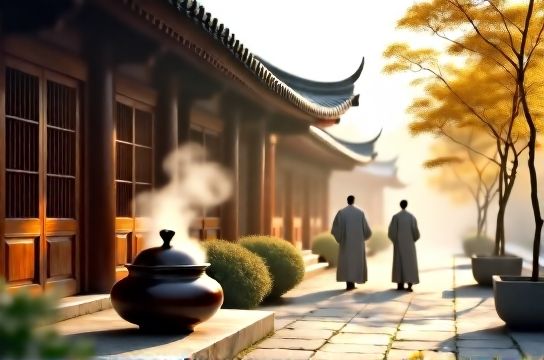
Chengdu doesn’t rush — it steeps. Not in haste, but in time: the slow unfurling of jasmine tea leaves in a lidded bowl, the low murmur of mahjong tiles clicking like metronomes, the pause between sips while a street performer tunes his pipa outside Wenshu Monastery’s east gate. This isn’t performative relaxation. It’s infrastructure — cultural, social, and spatial — engineered over centuries to support sustained presence.
Unlike Beijing’s layered urgency (where hutong alleys double as delivery corridors) or Shanghai’s vertical intensity (where coworking spaces in Jing’an hum with back-to-back pitch meetings), Chengdu operates on circadian logic calibrated to human metabolism. Locals don’t ‘find time’ for leisure — they structure life so leisure *is* the default tempo. And nowhere does this manifest more concretely than in the tea houses hugging Wenshu Monastery and the low-key bars spilling into nearby Tongzilin and Jinjiang districts.
H2: Wenshu Monastery: A Living Threshold Between Devotion and Daily Life
Wenshu Monastery isn’t a museum-piece relic. Founded in the Tang Dynasty and rebuilt in the Qing, it’s a working Buddhist temple — but one that breathes with the city. Its southern wall abuts a 300-meter stretch of narrow alley lined with family-run teahouses, many operating since the 1980s. These aren’t ‘monastery-adjacent’ — they’re *monastery-integrated*. Monks occasionally step out for tea; lay visitors bring offerings *and* order dan dan noodles from the same vendor who stocks pu’er cakes for the abbot’s guests.
The tea houses here follow a strict, unspoken typology:
– *Gongfu-style parlors* (e.g., Yuxi Teahouse): Bamboo stools, hand-carved rosewood tables, staff trained in gongfu cha ceremony. Expect ¥45–¥85 per person for premium Sichuan green or aged Fu Zhuan brick tea. Reservations recommended on weekends (Updated: May 2026).
– *Street-side bamboo stalls*: No signage, just a red awning and a kettle perpetually whistling. ¥8–¥12 for strong, smoky Zhuyeqing served in thick porcelain bowls. You sit on plastic stools, share tables, and overhear neighborhood disputes about property taxes and grandson’s university applications.
– *Hybrid reading-teahouses* (e.g., Xiyuan Book & Tea): Floor-to-ceiling shelves of second-hand Chinese philosophy and translated Murakami, free Wi-Fi, and ¥25 all-day tea passes. Popular with remote workers — though no laptops are allowed before 10 a.m., per house rules (a quiet hour enforced by the owner, a retired Sichuan University literature professor).
What makes these spaces structurally distinct from, say, Beijing’s Houhai lakeside cafes or Shanghai’s French Concession boutiques is their *non-commercial permeability*. There’s no entry fee, no minimum spend to occupy a seat for four hours, no pressure to reorder. You pay once, stay until dusk, and leave when your tea cools — a rhythm acknowledged, not optimized.
H2: Beyond the Bowl: How Tea Time Shapes Urban Behavior
Chengdu’s slow living isn’t aesthetic — it’s behavioral scaffolding. Consider the numbers: average daily tea consumption per adult in Chengdu is 1.7 liters (vs. 0.9 L in Guangzhou and 0.4 L in Beijing), and 68% of residents visit a public teahouse at least twice weekly (Chengdu Municipal Bureau of Culture and Tourism, Updated: May 2026). That volume translates into tangible urban design choices:
– Sidewalks widen near teahouse clusters to accommodate overflow seating — not for pedestrians, but for lingering.
– Public bus routes detour slightly around Wenshu Monastery’s eastern perimeter to avoid disrupting the acoustic buffer of rustling bamboo groves.
– City planning codes mandate that new residential developments within 500 meters of historic temples include at least one ground-floor commercial unit designated for ‘low-intensity community use’ — i.e., tea, calligraphy, or tai chi instruction. No fast-food franchises permitted.
This isn’t nostalgia. It’s policy-as-practice — codified slowness.
H2: The Laidback Bar Counterpoint: Where ‘Slow’ Meets Subversion
If Wenshu’s teahouses represent Chengdu’s inherited rhythm, its laidback bars are where that rhythm gets quietly remixed. Forget neon-lit cocktail dens or DJ booths. Here, ‘bar’ means a repurposed courtyard house with mismatched armchairs, a single tap line pouring local craft lager (e.g., Boxing Cat’s Sichuan Pale Ale), and playlists curated by DJs who also teach high school physics.
Three archetypes dominate:
1. **Courtyard Bars** (e.g., Shu Bar, Tongzilin): Former residential compounds with koi ponds now doubling as beer gardens. No cover charge. ¥32–¥48 for 500ml craft brews. Staff rotate monthly — bartenders are often musicians, illustrators, or grad students. You’ll hear debates about Heidegger while someone fixes a leaky faucet with duct tape and a chopstick.
2. **Record + Tea Hybrid Spots** (e.g., Vinyl & Leaf): Half vinyl listening lounge, half gongfu tea bar. Pay ¥60 for a 90-minute session: choose a record (mostly 1970s–90s Chinese rock or jazz-funk imports), select your tea (aged white tea recommended with Miles Davis), and listen uninterrupted. No phones allowed — staff collect them at the door in cloth pouches. Capacity: 12 people. Bookings open every 1st of the month at 8 a.m. sharp (Updated: May 2026).
3. **Late-Night Noodle + Beer Stands** (e.g., Lao Ma Xia): Open 10 p.m.–4 a.m. Serves dan dan mian with chili oil infused with Sichuan peppercorns *and* cold Tsingtao in ceramic mugs. ¥22 for noodles + beer. The ‘laidback’ comes from zero ambiance — bare bulbs, Formica counters, staff who won’t make eye contact unless you ask for extra vinegar. It’s anti-theatrical. Anti-curated. Deeply Chengdu.
These spaces succeed because they reject the Shanghai model of ‘experience economy’ — no Instagrammable walls, no tasting menus, no ‘vibe curation’. Their value lies in *absence*: absence of surveillance, absence of upsell, absence of implied performance. You’re not a customer. You’re a temporary resident.
H2: Why This Works (And Where It Doesn’t)
Chengdu’s slow living ecosystem isn’t universally replicable — nor should it be. Its viability rests on three interlocking conditions:
1. **Density without verticality**: Average building height near Wenshu is 4–6 stories. This keeps foot traffic human-scaled and allows micro-businesses (like a single-stall tea vendor) to survive on walk-by volume — impossible in Shanghai’s tower-dominated Jing’an or Beijing’s gated compound sprawl.
2. **Intergenerational occupancy**: 41% of households near Wenshu Monastery include three or more generations under one roof (Chengdu Housing Authority, Updated: May 2026). Grandparents run teahouses; grandchildren manage WeChat ordering. Knowledge transfer is baked into daily operation — no ‘training manuals’ required.
3. **Low commercial rent floors**: Due to municipal heritage protections, annual rent increases for ground-floor units in designated ‘slow zones’ are capped at 3.5% — well below Chengdu’s citywide average of 7.2%. Without this, a ¥12 bamboo-stall tea wouldn’t survive.
But it has limits. Wi-Fi reliability in older teahouses remains inconsistent (only 62% report stable 2.4GHz coverage; 5GHz is rare). Power outages during summer monsoons still occur — and when they do, the response isn’t panic, but collective resignation and an impromptu storytelling circle. That’s authenticity — not convenience.
H2: Practical Navigation — What to Do, When, and How Much
Planning a visit? Skip generic ‘Chengdu highlights’ lists. Focus on rhythm alignment. Here’s how to embed yourself — not observe.
| Activity | Best Time | Key Location | Avg. Cost (CNY) | Pro Tip | Risk Factor |
|---|---|---|---|---|---|
| Gongfu tea ceremony | 9–11 a.m. (cooler, quieter) | Yuxi Teahouse, Wenshu Monastery East Gate | ¥68 | Ask for ‘old tree’ Longjing — limited stock, served only before noon | Weekend wait: 25–40 mins (no reservations accepted for groups <6) |
| Street-side bamboo tea | 3–5 p.m. (post-lunch lull) | Unmarked stall opposite Monastery’s south archway | ¥10 | Point to the thermos with yellow lid — that’s the smokiest Zhuyeqing | No English menu; point-and-nod system only |
| Vinyl + tea session | 7–8:30 p.m. (first slot, best acoustics) | Vinyl & Leaf, Jinjiang District | ¥60 | Book exactly at 8 a.m. on the 1st — slots sell out in <90 sec | No-show fee: ¥30 (enforced via WeChat Pay auto-deduct) |
| Late-night dan dan + beer | 11 p.m.–1 a.m. (peak noodle freshness) | Lao Ma Xia, Tongzilin | ¥22 | Order ‘extra numbing’ — means double Sichuan peppercorn infusion | Cash only; ATMs scarce after midnight |
H2: Beyond Chengdu — What Other Cities Can (and Can’t) Learn
Beijing’s hidden gems — like the courtyard poetry readings in Nanluoguxiang’s tucked-away siheyuan — share Chengdu’s emphasis on intimacy, but lack the temporal permission to linger. In Beijing, even ‘slow’ spaces operate on borrowed time: landlords raise rents yearly, forcing pop-ups to cycle every 8–12 months. Chengdu’s rent caps create continuity.
Shanghai modern culture thrives on velocity — coworking spaces in Shanghai don’t just offer desks; they bundle pitch coaching, investor intros, and live-streamed demo days. That’s valuable — but it’s a different operating system. Trying to graft Chengdu’s teahouse ethos onto Jing’an’s co-working hubs would collapse both models. One assumes scarcity; the other presumes abundance of time.
And then there’s Xi’an — where ancient city walls host drone light shows and VR Tang Dynasty tours. It’s a compelling case of 西安古今结合 (Xi’an’s blend of past and present), but the ‘past’ is often re-rendered as spectacle. Chengdu’s past is functional: the same stone wells used for tea-water sourcing in 1823 still feed today’s kettles.
H2: Your First Step Into the Rhythm
Don’t arrive with a checklist. Arrive with a question: *What pace am I willing to hold today?*
Sit at the bamboo stall. Let the steam rise. Watch the old man across the table re-roll his cigarette paper three times before lighting it. Don’t photograph it. Just notice the weight of the bowl in your hands — warm, slightly uneven, glazed with decades of tea stains.
That’s Chengdu slow living: not empty time, but time made visible.
For deeper logistical support — transport links, seasonal tea availability charts, and verified local contacts — refer to our full resource hub. It’s updated biweekly and includes real-time stall closures due to monsoon repairs or monk retreat schedules. You’ll find everything you need to move *with* the rhythm, not against it.
H2: Final Note — Slowness Is a Skill, Not a Setting
Chengdu doesn’t ‘have’ slow living. It practices it — daily, deliberately, and sometimes messily. The spilled tea, the broken tile patched with epoxy and gold leaf, the barista who pauses mid-pour to help a neighbor fix a bicycle chain — these aren’t quirks. They’re curriculum.
You won’t master it in three days. But if you let go of ‘coverage’ — skip the panda base, bypass Kuanzhai Alley’s souvenir gauntlet — and spend 90 minutes watching water boil in a Wenshu alley, you’ll carry something back: not a photo, but a recalibrated internal clock. One that ticks, yes — but also breathes.
That’s the real export. Not Sichuan peppercorns. Not mapo tofu. A different relationship to time — proven, portable, and quietly revolutionary.