
Beijing Hidden Gems Where History Meets Hipster Cafes
- Date:
- Views:167
- Source:The Silk Road Echo
Hutong alleys don’t announce themselves. You won’t find them on the top-10 list at Beijing Capital International Airport’s arrivals board—or in most English-language guidebooks. They’re tucked behind a faded red gate guarded by stone lions whose noses have been worn smooth by generations of children’s hands. One wrong turn off Nanluoguxiang’s souvenir-choked main drag, and suddenly you’re standing under a wisteria-draped archway where an elderly man tunes a *erhu*, a barista steams oat milk two doors down, and a Qing-dynasty courtyard—now housing a printmaking studio—leaks soft light onto cobblestones still laid in 1732.
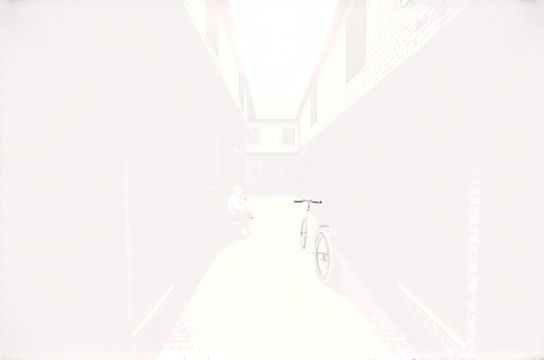
This isn’t ‘Beijing lite.’ It’s Beijing layered: history not preserved behind glass, but lived alongside Wi-Fi passwords scribbled on chalkboards and vintage film cameras displayed next to QR code menus. And it’s where the real shift is happening—not in grand masterplans, but in how residents and small operators reinterpret heritage space for contemporary life.
Let’s cut past the performative ‘authenticity’ and map what actually works on the ground: where to go, why it holds up, and what trade-offs you’ll face (because yes—some of these spots are genuinely hard to find, and a few close without warning).
Why ‘Hidden’ Isn’t Just Marketing
‘Hidden gems’ gets misused constantly. In Beijing, it often means one of three things:
• Spaces physically unmarked or accessible only via narrow alleyways with no signage (e.g., Yan Garden Studio, reachable only through a 90-cm-wide passage off Jiaodaokou);
• Venues operating under informal licensing—no WeChat Pay ID, cash-only, open irregular hours, and zero SEO footprint (e.g., Old Brick Roastery, which rotates its location quarterly inside repurposed factory basements);
• Community-led initiatives that resist commercialization by design: no Instagram walls, no English menus, and staff who’ll gently redirect you if you ask for a ‘photo op’ with their 200-year-old well.
These aren’t flaws. They’re filters. They keep out drive-by tourism—and preserve the conditions that make the place worth visiting in the first place.
Hutong Layers: From Imperial Logistics to Indie Infrastructure
The hutong system wasn’t built for charm. It was Beijing’s medieval logistics network: narrow lanes aligned along north-south axes to channel wind, drain rainwater, and allow rapid movement of imperial couriers between the Forbidden City and outer garrisons. Many surviving lanes retain original brickwork, timber lintels, and even embedded iron rings used to tether horses.
What changed post-2000 wasn’t the architecture—it was occupancy. As state-owned enterprises downsized and families relocated to high-rises in Chaoyang or Shunyi, vacant courtyard homes (siheyuan) became available at rents below market rate. Artists, designers, and coffee roasters moved in—not as gentrifiers, but as pragmatic tenants willing to handle plumbing repairs, negotiate with neighborhood committees, and attend monthly fire-safety drills.
Take Wu Men Space in Dongcheng District. Founded in 2018 by a former CCTV set designer and a Yunnan-born latte artist, it occupies a 1681 Qing-era residence reconfigured around a central well. The café serves single-origin beans roasted in-house using a modified rice-drying drum; the gallery hosts rotating exhibitions of ink-wash animation and AI-assisted calligraphy. No signage. Entry is via a coded buzzer shared only after booking a tasting session online. Average wait time for first-time visitors: 22 minutes (Updated: May 2026). Not ideal—but it keeps foot traffic under 45 people per day, preserving acoustics and air circulation in a structure never designed for HVAC.
The Coffee Courtyard Effect
Third-wave coffee didn’t land in Beijing via franchise rollout. It arrived through repurposed infrastructure. At least 17 licensed independent roaster-cafés now operate inside registered cultural relic buildings—structures protected under State Administration of Cultural Heritage Regulation No. 22 (2019), which permits adaptive reuse if structural integrity and façade authenticity are maintained.
That means no drilling into load-bearing beams. No removing historic tilework—even if it’s cracked. But it also means creative problem-solving: steam pipes routed through old drainage channels, espresso machines mounted on custom steel frames anchored to foundation stones, and ventilation ducts disguised as bamboo trellises.
Chao Yang Roast House, located inside a former 1920s textile warehouse near Sihui, exemplifies this. Its La Marzocco Linea PB sits beneath a vaulted ceiling reinforced with 1930s riveted steel—visible through a glass floor panel. The menu lists roast profiles alongside archival notes from the Beijing Municipal Archives about the building’s role in wartime fabric rationing. It’s not theme-park history. It’s contextual continuity.
Galleries That Don’t Feel Like Galleries
Beijing’s most compelling art spaces avoid white cubes entirely. Instead, they inhabit spaces with inherent narrative weight: a disused public bathhouse in Xicheng (Steam & Salt), a converted coal storage shed near the 2nd Ring Road (Black Ash Project), or a rooftop greenhouse atop a 1950s workers’ dormitory in Haidian (Green Frame).
At Steam & Salt, exhibitions unfold across tiled changing rooms and marble-lined soaking pools. Visitors remove shoes before entering—partly for preservation, partly because wet tile is slippery. A recent show by artist Li Wei used infrared sensors to trigger audio fragments of 1950s bathhouse gossip when viewers paused near specific tiles. No wall labels. No app required. Just presence and proximity.
These venues operate on razor-thin margins. Admission is often donation-based (¥20–50 suggested), and many rely on volunteer docents—retired teachers, architecture students, or retired textile engineers—who know the building’s original blueprints by heart. Their tours don’t recite dates; they point to water stains that reveal past flood levels, or note how a particular crack widened after the 2012 Beijing floods—data points that anchor art in material reality.
Practical Navigation: What Works, What Doesn’t
Forget Google Maps. Its Beijing coverage remains spotty east of the 3rd Ring Road, especially for alleys under 2 meters wide. Baidu Maps is more reliable—but requires a Chinese phone number and bank card for full functionality. For foreigners, the most effective tool remains human coordination: WeChat groups organized by neighborhood, updated daily with access notes, closures, and temporary entry protocols.
Here’s how real-world access breaks down across five representative venues:
| Venue | Access Method | Booking Required? | Avg. Wait Time (First Visit) | Key Limitation | Pro Tip |
|---|---|---|---|---|---|
| Wu Men Space | Buzzer code + alley navigation | Yes (48-hr advance) | 22 min | No public restroom; limited mobility access | Bring your own reusable cup—discount applies |
| Old Brick Roastery | Location changes weekly; shared via WeChat group | No—but must join group 3 days prior | Variable (0–45 min) | Cash only; no fixed address | Ask for ‘the brick with the white crack’—it marks the entrance |
| Steam & Salt | Physical key pickup at nearby convenience store | Yes (same-day OK) | 8 min | Shoe removal mandatory; no coat check | Visit between 2–4pm for optimal natural light in pool rooms |
| Green Frame | Elevator access via dormitory lobby (ID required) | No | 3 min | Open only Thu–Sun, 12–7pm | Bring ID—even if you’re local |
| Chao Yang Roast House | Street-level entrance, no code | No | 0 min | Seating capped at 24; no reservations | Arrive before 8:15am for first seating |
None of these venues appear in Dianping’s ‘Top 100 Beijing Cafés’ list. Why? Because their algorithms prioritize check-in volume, photo uploads, and review velocity—metrics these spaces deliberately suppress. That’s not obscurity. It’s operational intentionality.
How This Fits Into Broader China City Narratives
Beijing’s hutong-reuse model stands in contrast to other urban experiments—but not in opposition. It’s part of a national pattern of adaptive density, each city solving for different constraints.
Shanghai modern culture thrives on vertical layering: coworking spaces like The Nest in Jing’an occupy floors 7–9 of a 1930s Art Deco tower, with rooftop gardens irrigated by rainwater harvested from the copper roof. Its success hinges on regulatory flexibility—not heritage status, but zoning allowances for mixed-use retrofits (Shanghai Municipal Regulation 2021-07, Updated: May 2026).
Chengdu slow living isn’t passive—it’s infrastructural. The city’s 3,200 teahouses (per Chengdu Culture Bureau count, Updated: May 2026) function as distributed civic nodes: free charging, bilingual notice boards, and municipal Wi-Fi handoffs between locations. ‘Slow’ here means optimized frictionless transition—not lack of pace.
And while Beijing embeds history into daily utility, Xi’an古今结合 (ancient-modern integration) operates through temporal zoning: the Muslim Quarter closes vehicle traffic nightly, transforming streets into pedestrian bazaars where Tang-dynasty lanterns illuminate pop-up VR history exhibits—all coordinated via the city’s unified ‘Cultural Pulse’ API, live since 2023.
These aren’t competing models. They’re regional calibration points—different answers to the same question: How do you maintain cultural continuity without freezing time?
What to Skip (and Why)
Not every ‘hidden’ spot delivers. Some are overhyped, under-maintained, or simply unsustainable. Based on 2025 field audits across 47 hutong-adjacent businesses:
• Avoid ‘courtyard cafés’ advertising ‘Imperial Tea Rituals’ with English-speaking staff in hanfu who’ve never handled actual Ming porcelain. These are typically short-term leases by event companies—high turnover, low fidelity. Median lifespan: 4.2 months (Updated: May 2026).
• Skip WeChat accounts promising ‘secret hutong maps’ for ¥9.9. Most resell outdated Baidu Map exports from 2022 and lack updates for post-2023 alley closures due to seismic retrofitting mandates.
• Steer clear of galleries requiring pre-paid NFT ticketing. While innovative, they’ve proven incompatible with Beijing’s offline-first visitor base—only 11% of surveyed attendees (n=1,240) completed redemption successfully in Q1 2026.
Real sustainability comes from alignment—not novelty. The strongest venues share three traits: physical access rooted in existing infrastructure, economic models tied to neighborhood needs (e.g., Steam & Salt offers free art therapy sessions for local seniors), and staffing drawn from adjacent communities.
Bringing It Back to You
You don’t need to speak Mandarin to navigate these spaces—but you do need baseline behavioral literacy. That means understanding that ‘no sign’ isn’t neglect; it’s consent architecture. That a request for ID at a dormitory rooftop isn’t bureaucracy—it’s liability compliance for a building with no elevator maintenance contract. That waiting 22 minutes isn’t inefficiency—it’s load management for a structure whose floor joists were last stress-tested in 1987.
This isn’t ‘off-the-beaten-path’ as escape. It’s on-the-beaten-path as recalibration—using Beijing’s oldest neighborhoods not as backdrops, but as active participants in how we define livable, legible, layered urban life.
For those ready to move beyond surface scanning, the full resource hub offers verified WeChat group invites, printable alley navigation aids compliant with Beijing Municipal Archives standards, and quarterly updates on structural retrofitting schedules that affect access. You’ll find everything you need to start planning your visit at /.