
From Hutongs to High-Rises: Navigating China’s Evolving Cityscapes
- Date:
- Views:157
- Source:The Silk Road Echo
If you've ever wandered through Beijing's narrow hutongs, sipping tea in a courtyard teahouse while electric scooters buzz past, then suddenly found yourself dwarfed by Shanghai’s neon-lit skyscrapers, you’ve felt the pulse of modern China—one foot in ancient tradition, the other sprinting into the future.
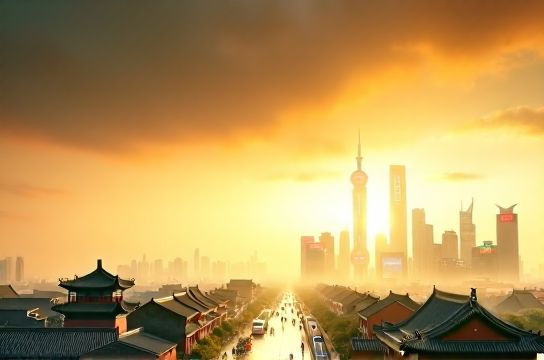
China’s cityscapes are evolving at warp speed. Over the past four decades, urbanization has transformed the country from largely rural to over 65% urban—home to more than 900 million city dwellers. From historic alleyways to supertall towers, understanding this duality isn’t just fascinating—it’s essential for travelers, investors, and culture lovers alike.
The Old Meets New: A Tale of Two Cities
Take Beijing. Its hutongs—centuries-old alley neighborhoods—are cultural treasures. Yet, only about 20% of the original hutong network remains due to redevelopment. Meanwhile, Shanghai boasts the world’s largest metro system (over 800 km of track) and more cranes per capita than any other city on Earth.
This contrast isn’t accidental. It’s policy-driven. Since 2013, China has invested over $1.2 trillion in urban infrastructure under its national new-type urbanization plan, aiming for smarter, greener cities by 2035.
Urban Evolution at a Glance
| City | Population (2024) | Green Space per Capita (m²) | Skyscrapers (>150m) | Heritage Sites |
|---|---|---|---|---|
| Beijing | 22 million | 16.5 | 178 | 7 UNESCO sites |
| Shanghai | 27 million | 9.2 | 265 | 2 UNESCO sites |
| Shenzhen | 18 million | 18.1 | 382 | 0 UNESCO sites |
As the table shows, Shenzhen—once a fishing village—is now China’s tech capital with more skyscrapers than any city globally. But it lacks UNESCO heritage, highlighting the trade-offs between rapid growth and cultural preservation.
What This Means for Travelers & Explorers
Want authenticity? Seek out protected hutong zones like Nanluoguxiang or join local-led walking tours. Craving futurism? Visit Shanghai’s Pudong district at night—the skyline looks like a scene from Blade Runner.
And don’t sleep on Chengdu or Hangzhou. These cities blend tech innovation with livability, ranking high in quality-of-life indexes thanks to expansive parks and efficient public transit.
The Road Ahead
China isn’t just building cities—it’s redefining them. With over 200 smart city pilots using AI for traffic control and energy efficiency, the future is already here. But can it preserve soul amid steel?
The answer lies in balance. As rooftops turn to farms and ancient temples sit blocks from robot-run cafes, one thing’s clear: navigating China’s evolving cityscapes means embracing contradiction—and loving every chaotic, beautiful moment of it.