
China City Guide to Green Spaces in Concrete Jungles
- Date:
- Views:203
- Source:The Silk Road Echo
If you're exploring China's megacities, you might think it's all skyscrapers, subways, and street food chaos. But here’s the truth: urban green spaces in China are not just surviving — they’re thriving. As a travel & urban design blogger who’s wandered through over 15 Chinese cities, I’ve seen how parks, rooftop gardens, and riverfront trails are quietly transforming life in these concrete jungles.
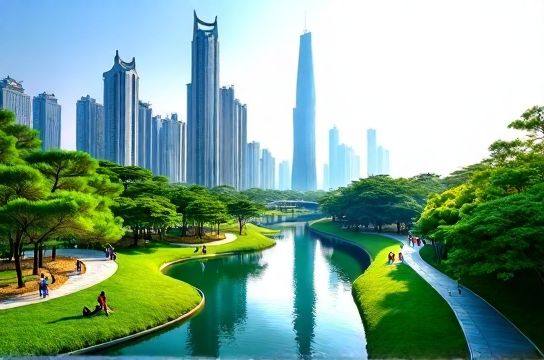
Take Shanghai. Most tourists hit the Bund or Nanjing Road, but locals flock to Century Park — a 1.4-square-kilometer oasis with lakes, walking trails, and even paddle boating. And it’s not alone. Beijing’s Olympic Forest Park spans over 6.8 square kilometers, making it larger than Central Park in New York.
But why does this matter? Because access to green space directly impacts mental health, air quality, and community well-being. According to the World Health Organization, cities should provide at least 9m² of green space per resident. Let’s see how China stacks up:
| City | Green Space per Capita (m²) | Total Urban Green Area (km²) | Notable Park |
|---|---|---|---|
| Beijing | 16.3 | 86.7 | Olympic Forest Park |
| Shanghai | 8.5 | 42.1 | Century Park |
| Shenzhen | 18.2 | 39.8 | Lianhuashan Park |
| Chengdu | 15.0 | 34.5 | People’s Park |
As you can see, urban green spaces in China vary widely — but top-tier cities are exceeding WHO recommendations. Shenzhen, often called China’s “greenest tech city,” integrates nature into its DNA with over 1,200 parks within city limits.
One underrated gem? Fulongqin Wetland Park in Chengdu. It’s not on most tourist maps, but it’s a birdwatcher’s paradise and a perfect example of ecological restoration in action. The city restored this area from degraded farmland into a functioning wetland — now home to over 130 plant species and 40+ bird types.
Another game-changer is the rise of sky gardens and vertical forests. In Nanjing, the Nanjing Vertical Forest twin towers host 23 different tree species and over 2,500 shrubs — absorbing an estimated 25 tons of CO₂ annually. That’s like taking 50 cars off the road each year.
So if you're planning your next trip, skip the crowded malls. Instead, follow the locals to their favorite parks in Chinese cities. Whether it’s morning tai chi in Guangzhou’s Yuexiu Park or sunset cycling along Hangzhou’s West Lake trail, these green zones offer authenticity you won’t find in guidebooks.
Pro tip: Download apps like MoBike or Meituan Maps to locate nearby parks with real-time crowd data. Many parks now feature QR-coded info boards with plant species and historical facts — eco-education meets urban exploration.
In short, don’t underestimate the power of green in China’s gray landscapes. These spaces aren’t just pretty — they’re essential, accessible, and increasingly innovative.