
Shanghai's Pulse: Exploring the Heart of Modern Chinese Culture
- Date:
- Views:223
- Source:The Silk Road Echo
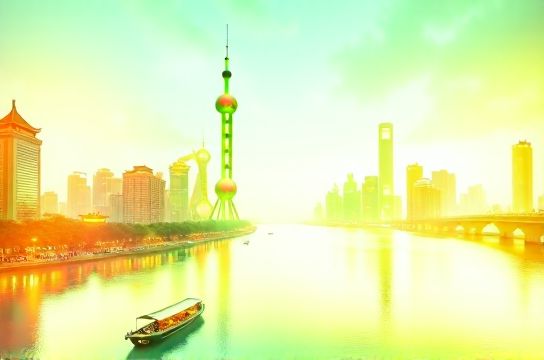
If you’ve ever wondered what it feels like to step into the future while still brushing shoulders with history, Shanghai’s got your number. This city doesn’t just move fast — it *is* the movement. Skyscrapers slice the clouds in Pudong, while old stone gates and alleyway dumpling stalls whisper stories from a century ago. Shanghai isn’t just China’s financial hub; it’s the beating heart of modern Chinese culture, where tradition tangoes with tech, and street fashion walks hand-in-hand with ancient tea rituals.
Let’s get real for a sec — when people say "cosmopolitan," they might as well be describing Shanghai. Walk down Nanjing Road, and you’re hit with a sensory overload in the best way possible: neon lights, pop-up sneaker shops, bubble tea stands on every corner, and crowds that move like a perfectly choreographed dance. But take a quick left into Tianzifang, and suddenly you're in a maze of art studios, indie cafes, and locals bartering over handmade jewelry. That’s the magic of this city — it flips the script before you even realize it’s changed scenes.
Food? Oh, don’t get me started. Shanghai’s food scene is like a backstage pass to China’s cultural evolution. You’ve got xiaolongbao steaming up in family-run spots in Yangpu, fusion ramen-burgers popping off in Jing’an, and rooftop bars serving lychee martinis with a side of skyline views. It’s not just about eating — it’s about experiencing how flavors evolve when East truly meets West.
And let’s talk culture beyond the plate. Museums like the Power Station of Art (yep, a former power plant turned avant-garde gallery) show how Shanghai repurposes its past to fuel creative expression. Meanwhile, live house gigs in Xuhui bring underground bands to packed rooms of fans who know every lyric — proof that youth culture here isn’t just alive, it’s leading the charge.
What makes Shanghai different from other megacities? It’s the rhythm. There’s a pulse under everything — in the way people ride e-bikes through rain-soaked streets, how startups launch from co-working spaces by day and turn into cocktail lounges by night, and how a 90-year-old grandpa practices tai chi in the park while his granddaughter livestreams fashion hauls nearby.
Sure, Beijing has history. Hangzhou has serenity. But Shanghai? It’s where China’s present — and future — are being written in real time. It’s bold, it’s chaotic, and honestly, it’s kind of addictive.
So if you want to feel what modern Chinese culture *actually* looks and sounds like — not the textbook version, but the lived, breathed, street-level truth — come walk the Bund at dusk. Watch the sun dip behind colonial-era buildings as the neon across the river flickers on. That moment? That’s Shanghai’s pulse. And once you feel it, you won’t forget it.