
East Meets West: The Architectural Tapestry of Shanghai
- Date:
- Views:302
- Source:The Silk Road Echo
When you step into Shanghai, it’s like walking into a living movie set where old-world charm crashes headfirst into futuristic skyline drama. Seriously, where else can you see a 500-year-old temple chilling next to a 632-meter-tall skyscraper? Welcome to the architectural wonderland where East truly meets West.
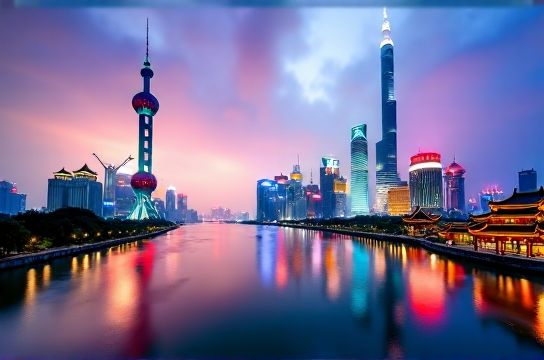
Shanghai isn’t just China’s financial powerhouse—it’s a visual feast of design evolution. Stroll along the Bund, and you’ll feel like you’ve time-traveled to 1920s Europe. Think neoclassical banks, Gothic spires, and art deco gems—all built during the colonial era. These buildings once housed foreign trading firms, and now? They’re luxury hotels, high-end bars, and Instagram hotspots. The contrast is wild: on one side, the Huangpu River reflects century-old stone facades; on the other, Pudong’s skyline shoots into the clouds with the Oriental Pearl Tower, Jin Mao, and the sleek Shanghai Tower playing architectural giants.
But here’s the cool part—Shanghai doesn’t just copy-paste styles. It remixes them. Take Xintiandi, for example. It’s a trendy district where traditional Shikumen houses—those narrow lane homes with stone gates—have been spruced up and turned into swanky cafes and boutiques. You get the vibe of old Shanghai alley life, but with avocado toast and craft lattes. It’s heritage with a side of hipster.
And let’s talk about that skyline. Pudong didn’t just grow—it exploded. The Shanghai Tower, wrapped in a spiral glass cloak, isn't just tall; it’s smart. It uses wind turbines, rainwater recycling, and sky gardens to stay eco-friendly. That’s next-level thinking. Meanwhile, the nearby Jing’an Temple sits peacefully under the shadow of glass towers, its golden roofs glowing like a spiritual oasis in the urban storm.
What makes Shanghai’s architecture so special is the balance. It’s not about choosing between old or new, Chinese or Western—it’s about letting them coexist, clash, and sometimes even dance together. Designers here don’t erase the past; they frame it. A modern museum might use ancient courtyard layouts. A luxury mall could feature calligraphy-inspired steel beams.
So whether you're a design geek, a history buff, or just someone who loves a killer city view, Shanghai delivers. It’s proof that cities can grow fast without losing their soul. The skyline tells a story—one of ambition, fusion, and fearless creativity. And honestly? It’s one of the most photogenic cities on the planet.
Next time you’re dreaming of travel, skip the predictable spots. Head to Shanghai. Walk the Bund at night when the lights flicker across the river, grab a bubble tea in a repurposed heritage house, and look up. That’s not just architecture—that’s a city proud of its past and racing toward the future.