
Beijing Hidden Gems Ancient Gates Behind the Scenes
- Date:
- Views:244
- Source:The Silk Road Echo
Think you know Beijing? Think again. Beyond the Forbidden City and the bustling crowds of Tiananmen Square lies a quieter, more mysterious side of the capital — one guarded by centuries-old gates that whisper stories of emperors, rebellion, and forgotten glory. Welcome to the hidden gems of Beijing: its ancient city gates, many long gone, some quietly surviving in plain sight.
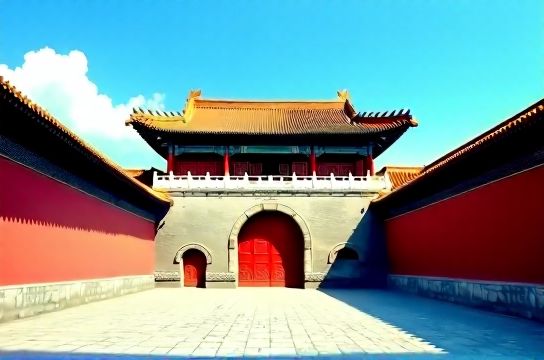
Long before skyscrapers and subways, Beijing was a fortress wrapped in gray brick walls and crowned with majestic gates. At their peak during the Ming Dynasty, the capital boasted nine grand gates, each serving a unique purpose — from military defense to imperial processions. Today, only a few remain, but those that do offer a rare glimpse into Beijing’s layered past.
The Forgotten Nine: A Glimpse at Beijing’s Gate Heritage
Back in the 15th century, Beijing’s Inner City was encircled by over 24 kilometers of walls and guarded by nine imposing gates. These weren’t just entrances — they were symbols of power, order, and cosmic balance. Here's a quick look at the original nine:
| Gate Name | Function | Status (2024) |
|---|---|---|
| Zhengyangmen (Qianmen) | Emperor’s gate — only he could pass through the central arch | Restored, open to public |
| Chongwenmen | Tax collection point for goods entering the city | Gone (only name remains in subway station) |
| Xuanwumen | Western gate; associated with executions | Gone, but name lives on |
| Fuchengmen | Northwest gate; trade route access | Demolished in 1969 |
| Xizhimen | Gateway for travelers heading west | Replaced by traffic circle |
Wait — that’s only five. Truth is, most gates were torn down in the 1960s to make way for the subway and urban expansion. But don’t mourn just yet. The story isn’t over.
Where to Find the Survivors
Today, Zhengyangmen stands tall as the only fully preserved gate complex. Locals call it Qianmen — and yes, it’s surrounded by tourist shops and neon signs, but step inside the tower, and you’ll find a surprisingly serene museum dedicated to Beijing’s urban evolution.
A short walk away, the Yongdingmen Gate, originally built in 1553, was meticulously reconstructed in 2004. Now anchoring the southern end of the Beijing Central Axis, it’s part of a UNESCO World Heritage nomination. Fun fact: the reconstruction used traditional materials and techniques — no modern steel frames!
Why These Gates Matter
In a city racing toward the future, these gates are anchors to identity. They remind us that Beijing wasn’t always a megacity of 22 million. It was once a carefully planned imperial capital, where every gate had meaning, every wall had purpose.
And here’s a kicker: walking beneath Zhengyangmen at night, when the crowds fade and the lights dim, you can almost hear the echo of horse-drawn carriages and palace guards calling out the hour.
So next time you’re in Beijing, skip the usual hotspots. Hunt down these ancient gates. Bring a camera, a curious mind, and maybe a local friend who knows the old stories. You won’t just see history — you’ll feel it.