
East Meets West: Navigating the Cultural Crossroads of China’s Urban Centers
- Date:
- Views:239
- Source:The Silk Road Echo
If you've ever strolled down Shanghai's Nanjing Road while sipping a bubble tea under a neon-lit Starbucks sign — only to turn the corner and find a centuries-old temple tucked between skyscrapers — you’ve felt it: the electric pulse of East meets West in China’s urban centers. This isn’t just globalization; it’s cultural alchemy.
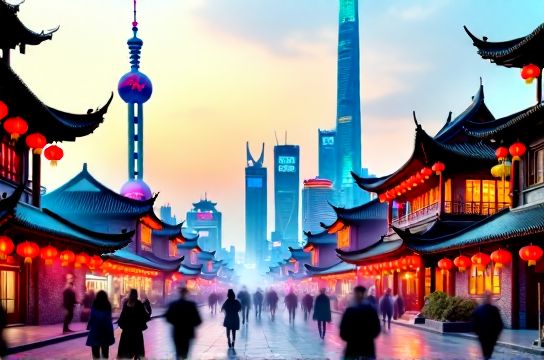
China’s major cities — Beijing, Shanghai, Guangzhou, and Shenzhen — are no longer just economic powerhouses. They’re living laboratories where ancient traditions tango with futuristic innovation. Let’s dive into what makes these metropolises so uniquely hybrid.
The Fusion Frontier: Where Tradition Meets Tomorrow
Take Shanghai. With over 27 million residents and a GDP surpassing $500 billion, it’s China’s financial heartbeat. Yet, walk through the French Concession, and you're surrounded by colonial-era architecture, indie coffee shops, and bilingual street signs. It’s Europe with a Chinese accent.
Meanwhile, Beijing blends imperial grandeur with digital disruption. The Forbidden City stands proudly just miles from Zhongguancun, dubbed 'China’s Silicon Valley,' home to tech giants like Baidu and Xiaomi.
Cultural Hybridity in Action
This blend isn’t skin-deep. It shows up in daily life:
- Dining: Michelin-starred Cantonese restaurants serve Peking duck with truffle oil.
- Fashion: Local designers mix qipao silhouettes with streetwear vibes.
- Lifestyle: Young professionals meditate via apps like Keep while riding Didi scooters.
Even language reflects this mash-up. “Mádá” (no problem) meets “Okay, laoshi” in classrooms and boardrooms alike.
Data Snapshot: Urban China at a Glance
Here’s how four key cities compare in blending culture and modernity:
| City | Population (millions) | GDP (USD billions) | Foreign Embassies/Consulates | Cultural Heritage Sites (UNESCO) |
|---|---|---|---|---|
| Beijing | 21.5 | 680 | 175+ | 7 |
| Shanghai | 27.1 | 546 | 76 | 1* |
| Guangzhou | 18.7 | 338 | 65 | 0 |
| Shenzhen | 17.5 | 400 | 15 | 0 |
*Shanghai’s historic districts are on UNESCO’s tentative list
Why This Matters for Travelers & Expats
For visitors, this fusion means unparalleled experiences. You can attend a traditional tea ceremony in the morning and a VR art exhibit by night. For expats, cities like Shanghai offer international schools, global job markets, and a surprisingly smooth integration curve — nearly 70% of foreign professionals report feeling 'culturally at home' within six months (2023 Global Mobility Report).
But it’s not all seamless. Language barriers, social etiquette nuances, and digital firewall challenges still exist. Pro tip? Download WeChat before you land — it’s the Swiss Army knife of Chinese urban life.
The Future is Blended
As China pushes smart city initiatives — think facial-recognition transit and AI-driven public services — the East-West blend will only deepen. These cities aren’t losing their soul; they’re evolving it.
So whether you're chasing history, hustle, or hygge with a Confucian twist, China’s urban crossroads invite you to step into a world where the past doesn’t just coexist with the future — it dances with it.