
and Urban Energy
- Date:
- Views:159
- Source:The Silk Road Echo
In the hustle and bustle of modern life, smart cities are no longer a sci-fi fantasy—they’re our reality. From Barcelona to Singapore, urban centers are harnessing technology to tackle one of their biggest challenges: energy. So, how exactly are these cities turning concrete jungles into sustainable powerhouses? Let’s dive in.
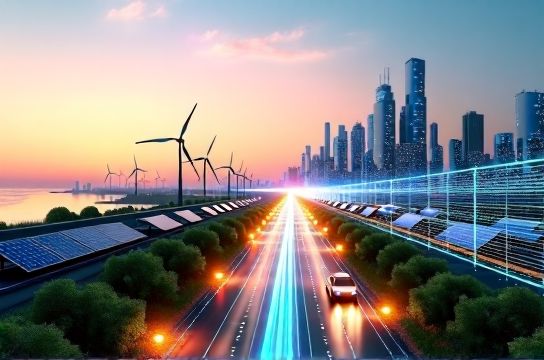
Urban areas consume over 65% of the world’s energy and produce more than 70% of global CO₂ emissions (IEA, 2023). That’s a massive footprint. But with great challenge comes great opportunity. By integrating smart grids, renewable sources, and data-driven management, cities are redefining how we use energy.
The Smart City Energy Revolution
At the heart of this transformation is the smart grid—a digital upgrade to traditional power systems. Unlike old grids that push electricity one-way, smart grids communicate in real time, balancing supply and demand efficiently. For example, when solar production peaks at noon, excess energy can be stored or rerouted to high-demand zones.
Take Copenhagen. The Danish capital aims to be carbon-neutral by 2025. How? Through district heating powered by waste-to-energy plants and wind farms. Over 98% of households are connected to its smart heating network, cutting both emissions and costs.
Renewables Take Center Stage
Solar panels on rooftops, wind turbines along coastlines, and even kinetic tiles in sidewalks—cities are getting creative. According to IRENA, urban solar installations grew by 22% annually from 2020 to 2023. In Los Angeles, the Green New Deal targets 100% renewable energy by 2035, already achieving 40% clean power in 2023.
Real-World Impact: A Snapshot
Beyond buzzwords, let’s look at hard numbers:
| City | Energy Efficiency Gain (%) | Renewable Share (%) | Annual CO₂ Reduction (kt) |
|---|---|---|---|
| Singapore | 30 | 12 | 450 |
| Amsterdam | 25 | 20 | 380 |
| Vancouver | 35 | 90 | 520 |
These aren’t just stats—they represent cleaner air, lower bills, and smarter infrastructure.
Challenges & The Road Ahead
Of course, it’s not all smooth sailing. Upfront costs, legacy systems, and policy hurdles slow progress. Yet, with AI-powered energy forecasting and blockchain-based peer-to-peer trading emerging, the future looks bright.
In short, the fusion of urban planning and clean energy isn’t optional—it’s essential. As cities house 60% of humanity by 2030 (UN-Habitat), smart energy solutions will define our sustainability story.