
A Morning at Beijing's Hidden Hutongs: Coffee vs. Tea in Modern China
- Date:
- Views:255
- Source:The Silk Road Echo
If you've ever wandered through Beijing’s maze of hutongs—those narrow, winding alleys where old meets new—you’ve probably smelled it: the earthy aroma of aged pu’er tea drifting from a courtyard, clashing (in the best way) with the sharp espresso shot from a minimalist coffee bar tucked into a 300-year-old courtyard house.
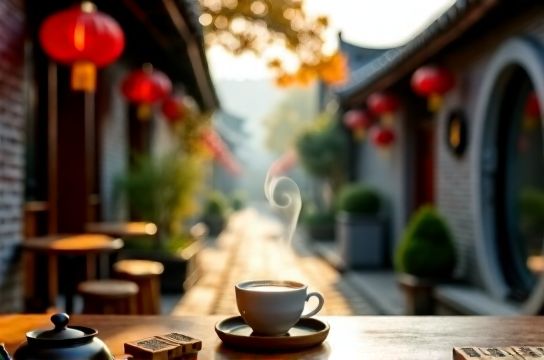
Welcome to modern China, where tradition sips quietly from a gaiwan while innovation pulls a double shot on a La Marzocco. This isn’t just about caffeine—it’s a cultural conversation brewing in every cup.
The Ritual: Tea’s Timeless Grace
Tea in China isn’t drunk; it’s performed. In hutong homes and hidden teahouses, elders still follow gongfu cha—the 'skillful method'—using tiny clay Yixing pots, multiple steepings, and a rhythm passed down generations. A single session can unlock up to 10 nuanced infusions from one leaf.
Take Longjing (Dragon Well) green tea: harvested once a year in spring, its delicate chestnut notes reflect terroir like fine wine. Or try Tieguanyin, an oolong that dances between floral and roasted, each brew revealing new layers.
The Revolution: Coffee’s Urban Climb
Fast-forward to 2024, and China now boasts over 100,000 coffee shops, with Beijing leading the charge. Chains like % Arabica and local stars like Seesaw are setting up shop in repurposed siheyuans, serving $6 flat whites to Gen Z professionals who see coffee as both fuel and identity.
But here’s the twist: Chinese coffee culture isn’t copying Seattle or Melbourne. It’s reinventing itself—think osmanthus lattes, red date mochas, or cold brew infused with goji berries. These aren’t gimmicks; they’re bridges between heritage and hustle.
Coffee vs. Tea: By the Numbers
Let’s break it down:
| Metric | Tea (2023) | Coffee (2023) |
|---|---|---|
| Per Capita Consumption | ~500g/year | ~12 cups/year |
| Market Size (China) | $28 billion | $16 billion |
| Annual Growth Rate | 6.2% | 14.5% |
| Top Consumer Age Group | 45+ | 18–35 |
Source: Statista, China Beverage Association (2023)
So, Who Wins?
Nobody. And everyone. Because in Beijing’s hutongs, you don’t have to choose. You can start your morning with a silent tea meditation at a hidden Wuyi rock oolong session, then walk five minutes to a retro-futuristic café where baristas pour latte art shaped like pandas.
The real story? Coexistence. Tea grounds the soul. Coffee accelerates the day. And in these ancient alleyways, both find space to breathe, evolve, and invite you in.
Next time you're in Beijing, skip the Forbidden City crowds at dawn. Duck into a hutong instead. Order a gongfu brew. Then cross the lane for a soy-milk cappuccino. That’s not just breakfast—it’s cultural harmony in liquid form.