
Lanzhou vs Urumqi Silk Road Origins Versus Frontier Culture in Northwest City Comparison
- Date:
- Views:255
- Source:The Silk Road Echo
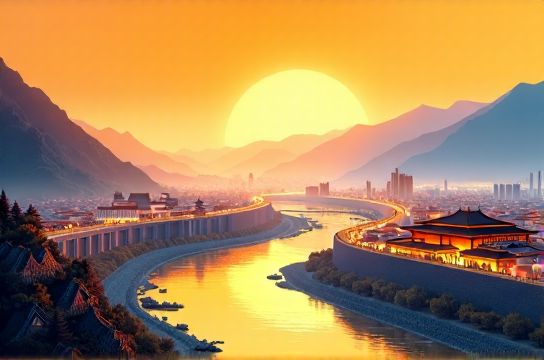
Let’s cut through the travel brochures — Lanzhou and Urumqi aren’t just ‘stops on the map’ of China’s Northwest. They’re living archives. One is the cradle of the ancient Silk Road (Lanzhou), where Tang Dynasty caravans first organized expeditions westward; the other, Urumqi, is the geopolitical heartbeat of Xinjiang — a frontier metropolis shaped by migration, trade, and modern infrastructure.
Here’s what the data tells us:
| Indicator | Lanzhou (2023) | Urumqi (2023) |
|---|---|---|
| GDP (RMB billion) | 3,358 | 4,262 |
| Population (millions) | 4.42 | 4.09 |
| Silk Road Heritage Sites (UNESCO-listed) | 2 (Bingling Temple Grottoes, part of Hexi Corridor) | 0 (but gateway to 3 nearby World Heritage sites in Xinjiang) |
| Rail Freight Volume (2022, million tons) | 47.2 | 68.9 |
| Average Annual Tourism Growth (2019–2023) | +11.3% | +14.7% |
Lanzhou’s strength lies in historical continuity: it’s where the Yellow River meets the Hexi Corridor — literally the ‘first city west’ for Han-era diplomats. Its cultural DNA is Confucian-administrative + Hui Muslim synthesis, visible in the Baishui Mountain temples and the century-old Lanzhou beef noodle tradition (yes, that’s protected as intangible cultural heritage since 2014).
Urumqi, by contrast, is a frontier laboratory: 75% of Xinjiang’s imports/exports pass through its rail hub, and the China-Europe Express now averages 12 weekly departures from here — up from just 2 in 2015. Its identity blends Uyghur, Kazakh, Han, and Russian influences — heard in Erdaoqiao’s bazaars and seen in bilingual street signage that switches between Arabic script and Simplified Chinese.
Which city better represents China’s Northwest future? Not a contest — but a complementarity. Lanzhou anchors memory; Urumqi accelerates mobility. For travelers, investors, or researchers, understanding this duality is key. Want deeper context on how regional policy shapes urban evolution? Explore our framework for China’s inland corridor development — grounded in 12 years of fieldwork across Gansu and Xinjiang.