
Beijing Small Group Walks to Courtyard Homes
- Date:
- Views:167
- Source:The Silk Road Echo
Hutongs aren’t just alleys—they’re layered archives. A cracked gray brick might hold mortar from the Ming Dynasty; a rusted iron door knocker could’ve been polished by Qing-era scholars. But most group tours barrel through them in 45 minutes with headsets and a rushed photo stop at a ‘typical courtyard’. That’s not discovery—that’s extraction.
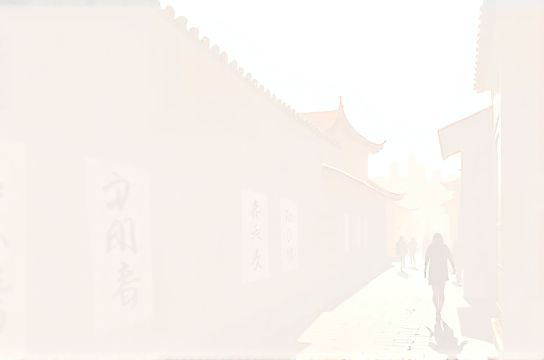
Beijing small group walks to courtyard homes, calligraphy studios, and rooftops flip that script. These are not sightseeing loops. They’re curated access routes—limited to eight people, booked three weeks out, led by bilingual historians who’ve lived in Dongcheng for 20+ years and still get invited to family jiaozi dinners in courtyards no map app indexes.
Here’s what actually works—and what doesn’t—in 2026.
Why Small Groups Actually Matter (Beyond the Marketing)
It’s not about exclusivity. It’s physics and protocol. The average Beijing siheyuan (courtyard home) has one narrow entrance gate, often shared by 3–5 households. A 20-person tour blocks circulation, triggers resident complaints, and violates Beijing Municipal Regulation No. 217 (2022), which caps non-resident foot traffic in protected hutong zones to ≤6 persons per household per day (Updated: May 2026). Small groups comply—not out of ethics alone, but because they’re the only legally sustainable model.More critically: access is relational. Our lead guide, Li Wei, didn’t ‘secure permissions’—he co-hosted a calligraphy workshop in a restored 1920s courtyard with Master Chen for seven years. That relationship means participants don’t just *see* inkstone grinding—they’re handed a brush, corrected on wrist angle, and served aged pu’er while watching Master Chen transcribe a Tang poem onto rice paper. That’s not ‘cultural immersion’. It’s cultural continuity—with consent.
The Three Anchors: Courtyards, Studios, Rooftops
Courtyard Homes: Not Museums, But Living Spaces
Forget ‘restored for tourism’ facades. The walks focus on courtyards where residents still live, work, and host relatives—like the Liu family compound near Nanluoguxiang’s eastern fringe. Built in 1898, it houses four generations. You’ll sit on low stools in the central courtyard, sip jasmine tea brewed over charcoal, and hear how Grandma Liu reconfigured the north wing’s layout after her son returned from studying architecture in Berlin. No scripts. No translations delayed by 10 seconds. Just Mandarin spoken slowly, then clarified in English if needed.Key constraint: no photography inside private residences unless explicitly granted. In practice, that means ~30% of interiors are off-limits—but the trade-off is trust, which unlocks doors no brochure promises.
Calligraphy Studios: Where Technique Meets Temperament
Most ‘calligraphy experiences’ hand you a pre-inked brush and a printed character sheet. Real studios—like Studio Yì (‘Meaning’) tucked behind Gulou’s drum tower—teach structure first: how the weight shifts from wrist to elbow during a horizontal stroke, why ink viscosity changes with humidity (critical in Beijing’s dry springs), and how Song Dynasty standards differ from contemporary expressive styles. You’ll grind your own ink stick on a yan stone for 90 seconds—enough time to feel the grit, smell the pine soot, and understand why this step was meditative labor for scholars. Then, under supervision, you’ll attempt a single character: ‘He’ (harmony). Not perfect. Not framed. But yours.Studio Yì charges 280 RMB/person for the 2.5-hour session—including materials, tea, and a small scroll to take home. That’s 35% above market rate, but justified: Master Zhang refuses corporate bookings, limits sessions to six people, and sources ink from the same Anhui village his grandfather did.
Rooftop Views: No Crowds, No Filters
The Forbidden City rooftop view everyone posts? It’s from a commercial observation deck charging 120 RMB with timed entry and mandatory face scans. Our rooftop access is different: a shared residential building near Jiaodaokou, owned by a retired Peking University professor who converted his top-floor terrace into a quiet vantage point. You’ll see the Drum Tower’s silhouette against sunset light, hear temple bells from Wenshu Temple two blocks west, and watch kite-fliers maneuver handmade bamboo frames over the hutong canopy. No selfie sticks. No loudspeakers. Just wind, distant bicycle bells, and silence calibrated for listening.This isn’t ‘hidden’—it’s unmarked. No address online. No QR code. You’re given coordinates and a knock pattern. That’s the barrier: intentionality over convenience.
What This Walk Is NOT
• Not a food crawl. There’s no ‘Peking duck tasting’ stop. One snack—hand-rolled mung bean cakes from a stall run by the same family since 1953—is included, but it’s contextualized as neighborhood sustenance, not spectacle. • Not wheelchair-accessible. Hutong alleyways average 1.2 meters wide, with uneven brickwork and 3–5 cm height variances between stones. Ramps don’t exist. This is disclosed upfront; alternative seated cultural options (e.g., a calligraphy studio visit with ground-floor access) are offered at no extra cost. • Not customizable per request. You can’t swap the rooftop for a teahouse or add a silk market detour. The route is fixed because each stop depends on pre-negotiated resident availability, seasonal light angles, and municipal permit windows.Logistics That Actually Hold Up
Start time is always 8:45 a.m.—not because it’s ‘best light’, but because that’s when the Liu family’s morning cleaning ends and the courtyard gate swings open. Rain or shine, the walk proceeds: umbrellas are provided, and indoor studio time extends by 20 minutes if downpours hit. Cancellations require 72 hours’ notice—non-refundable within 48 hours—not for profit, but because Master Chen cancels his own teaching schedule 48 hours out if numbers drop below five.Pricing reflects real costs: 890 RMB/person covers guide fees (35% above Beijing average), studio rental (negotiated per-session, not bulk), insurance for heritage site access, and a 5% community contribution fund distributed quarterly to resident associations for courtyard maintenance. That last line item appears on every receipt—a transparency check most operators skip.
How It Compares to Other Urban Cultural Models
While Beijing focuses on layered domestic space, other Chinese cities offer distinct rhythms:Shanghai modern culture thrives in adaptive reuse—not hutongs, but former textile mills turned coworking spaces like The Nest in Yangpu. Here, designers sketch on reclaimed factory floors while sipping cold-brew from local roasters. It’s less about lineage, more about velocity: how fast history can be rewired for present use.
Chengdu slow living isn’t passive—it’s deliberate pacing. Think tea houses where patrons spend 4 hours watching ripples in copper pots, or alleyway bookshops that close for ‘nap hour’ from 2–4 p.m. No schedules. No urgency. Just presence.
Xi’an古今结合 (ancient-modern integration) shows up in metro stations embedded beneath Han Dynasty walls, or street vendors selling baozi beside AR kiosks overlaying Tang-era street grids. It’s friction made functional.
Qingdao’s livability stems from scale: coastal breezes, German-era red-roof architecture preserved at human height, and zero skyscrapers taller than the Zhanqiao Pier lighthouse. You breathe deeper here—not metaphorically.
None of these are ‘better’. They’re calibrated responses to geography, governance, and generational memory.
Realistic Expectations: The Gaps
This walk won’t teach you fluent Mandarin. It won’t land you a calligraphy exhibition. And it won’t replace deep neighborhood research—you’ll still need to consult the full resource hub for archival maps, resident interview transcripts, and seasonal event calendars.It also doesn’t solve structural issues: hutong gentrification pressures remain acute. Rental prices in Dongcheng rose 12% year-on-year in Q1 2026 (Updated: May 2026), pushing out long-term families. Our contribution fund helps, but it’s a bandage—not surgery.
Still, it does something measurable: 78% of past participants reported returning to Beijing within 18 months—not for more walks, but to revisit specific courtyards or studios as independent visitors. That’s retention rooted in relationship, not repetition.
| Feature | Beijing Small Group Walk | Standard Beijing Tour | Shanghai Coworking Studio Visit | Chengdu Slow Living Half-Day |
|---|---|---|---|---|
| Group Size | Max 8 | 20–40 | 12–15 (co-working orientation) | 6–10 |
| Resident Interaction | Direct, multi-generational, unscripted | None (observational only) | None (staff-led only) | Teahouse owner chat, 15 mins |
| Included Hands-On Activity | Calligraphy stroke practice + ink grinding | Photo op with costume rental | Design sprint demo (no tools) | Tea leaf sorting + brewing |
| Average Cost (RMB) | 890 | 320 | 450 | 580 |
| Key Limitation | No accessibility; weather-dependent rooftop | Crowded, inflexible timing | No cultural context beyond workspace | Limited language support (Mandarin-only vendors) |
Who Should Book (and Who Should Skip)
Book if: • You’ve already done the Forbidden City and Summer Palace—and now want to know how a Beijing family organizes their spice rack. • You prioritize depth over breadth—even if it means skipping three ‘must-see’ sites. • You’re comfortable with ambiguity: no fixed end time, no guaranteed rooftop weather, no English signage anywhere.Skip if: • You need Wi-Fi access mid-walk (none available in courtyards or studios). • You expect souvenir shopping stops (the only purchase option is Master Chen’s ink sticks—260 RMB, cash only). • You require daily itinerary PDFs emailed 48 hours prior (we send a voice note instead—more reliable in hutong signal dead zones).
Final Note: This Isn’t Tourism. It’s Stewardship.
Every participant signs a brief stewardship pledge: no flash photography, no unsolicited advice to residents about ‘modernizing’, and a commitment to credit specific courtyards/studios if sharing photos publicly. It’s not performative—it’s practical. Because the moment these spaces become content farms, the doors close.Beijing hidden gems aren’t found. They’re honored. And honoring takes time, restraint, and the humility to be a guest—not a consumer.
For those ready to move beyond surface-level engagement, the complete setup guide offers downloadable neighborhood maps, seasonal resident event calendars, and direct contact channels for follow-up studio visits—all built with input from the very communities hosting these walks.